
Can You Bleach Wet Hair?

As an Amazon Associate, We earn from qualifying purchases.
Bleaching wet hair is generally not recommended by hair professionals. While it might seem like a shortcut, wet hair is significantly more fragile and porous, making it highly susceptible to extreme damage, breakage, and uneven color results. For a safer, more predictable, and healthier lightening process, always apply bleach to dry, unwashed hair, following all manufacturer instructions and performing strand tests.
Can You Bleach Wet Hair?
Achieving that perfect shade of blonde or preparing your hair for a vibrant fashion color often involves one key step: bleaching. It’s a transformative process that can open up a world of color possibilities. But in the pursuit of those lighter locks, many people wonder about shortcuts or alternative methods. One question that pops up again and again is: “Can you bleach wet hair?”
It’s a fair question, especially if you’re thinking about saving time or perhaps imagining that wet hair might somehow be “easier” to work with. However, when it comes to lightening your hair, the answer from professionals is almost a unanimous “no.” Bleaching wet hair is a risky move that can lead to a host of problems, from uneven color to severe damage. Let’s dive deep into why this common misconception exists and, more importantly, how to bleach your hair safely and effectively.
Key Takeaways
- Avoid Bleaching Wet Hair: Hair is most fragile when wet, making it highly susceptible to damage, breakage, and an uneven lighten.
- Dilution and Unevenness: Water dilutes the bleach mixture, weakening its efficacy and leading to patchy, unpredictable lightening results.
- Increased Porosity: Wet hair is more porous, meaning it can absorb bleach unevenly, causing some areas to lighten too quickly while others remain resistant.
- Optimal Condition is Dry: For best and safest results, bleach should always be applied to dry, unwashed hair, which allows for maximum control and even penetration.
- Prioritize Hair Health: Always perform a strand test and patch test, and condition hair deeply before and after bleaching to minimize damage.
- Consider a Bleach Bath (with caution): A professional-only technique for very mild lightening or toning, a bleach bath involves highly diluted bleach on damp hair and is not the same as full-strength bleaching.
📑 Table of Contents
- The Fundamental Rules of Bleaching: Why Dry Hair Reigns Supreme
- The Perils of Bleaching Wet Hair: What Could Go Wrong?
- The Myth of “Bleach Bathing” (and when it’s *actually* used)
- The Right Way to Bleach Your Hair: A Step-by-Step Guide for Dry Hair
- Post-Bleaching TLC: Nurturing Your Lightened Locks
- Conclusion
The Fundamental Rules of Bleaching: Why Dry Hair Reigns Supreme
Before we talk about why you shouldn’t bleach wet hair, let’s understand how bleaching works on dry hair, which is the gold standard for this process. Bleach is a powerful chemical mixture designed to lift your hair’s natural pigment, called melanin. When applied, it penetrates the hair shaft, opens up the cuticle (the outermost layer of your hair), and then breaks down the melanin molecules. This process is called oxidation, and it’s what makes your hair lighter.
The reason dry hair is crucial for this chemical reaction is multi-faceted. First, dry hair allows for a controlled and even application of the bleach mixture. When your hair is dry, its natural oils are present, providing a slight protective barrier for your scalp and strands. These oils also prevent the bleach from penetrating too quickly or too deeply, which can lead to damage. Moreover, applying bleach to dry hair ensures that the product’s full strength is directed at lifting pigment, not being diluted by water.
Understanding Hair Porosity and Damage
Hair porosity refers to how easily your hair’s cuticle layer allows moisture and products to enter and exit. Hair with high porosity has cuticles that are open or raised, making it absorb liquids quickly but also lose them just as fast. Low porosity hair has tightly bound cuticles, resisting moisture penetration.
When your hair is wet, its cuticles swell and open up, making it significantly more porous. This increased porosity means that bleach can penetrate the hair shaft much more rapidly and unevenly. Think of your hair like a sponge: a dry sponge absorbs liquid in a somewhat controlled way, but a wet sponge, already saturated, will react unpredictably when more liquid (in this case, bleach) is added. This increased vulnerability sets the stage for disaster when you bleach wet hair.
The Perils of Bleaching Wet Hair: What Could Go Wrong?
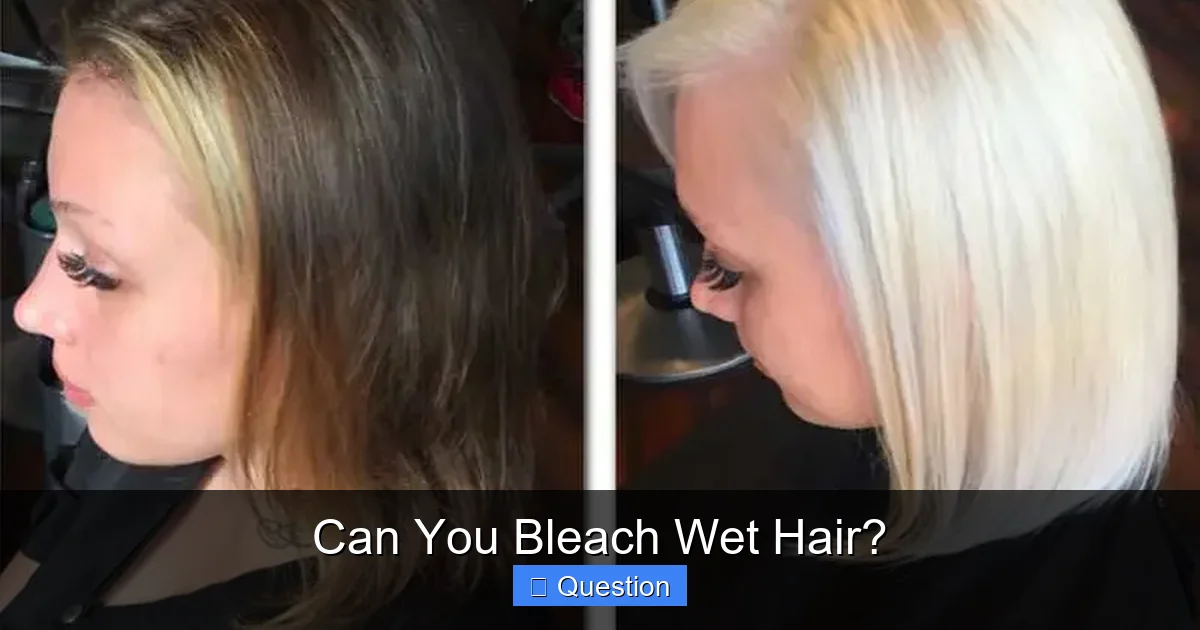
Visual guide about Can You Bleach Wet Hair?
Image source: i0.wp.com
Now that we understand the science, let’s explore the very real risks associated with bleaching wet hair. It’s not just a matter of suboptimal results; it can lead to serious damage that is difficult, if not impossible, to reverse.
Uneven Lift and Patchy Results
One of the most common issues with bleaching wet hair is the highly unpredictable outcome of the color. When bleach is applied to wet hair, the water present in your strands immediately dilutes the bleach mixture. This weakened bleach won’t lift pigment as effectively or consistently.
Imagine trying to paint a wall with watered-down paint. Some areas might get a hint of color, others will remain untouched, and you’ll end up with a splotchy, uneven mess. The same goes for your hair. The dilution effect, combined with the uneven absorption of wet, porous hair, will almost certainly lead to a patchy, brassy, or splotchy result. You might see some areas lighten significantly, while others barely change or turn an undesirable orange-yellow hue. Achieving a uniform, beautiful blonde becomes an impossible task.
Extreme Damage and Breakage
This is perhaps the most critical reason to avoid bleaching wet hair. Your hair is at its weakest and most elastic when it’s wet. Think about how easily a wet strand of hair can stretch and break compared to a dry one. The bonds that give your hair its structure are temporarily softened by water.
Now, introduce a powerful chemical like bleach to this already fragile state. The bleach will penetrate rapidly and aggressively, further compromising the hair’s integrity. This combination is a recipe for disaster. You risk severe damage, including:
- Gummy, Elastic Hair: Your hair might feel mushy, stretchy, and lose its natural elasticity.
- Extreme Breakage: Strands can literally snap off during rinsing or even brushing.
- “Melting” Hair: In severe cases, the hair can become so compromised that it feels like it’s melting and can disintegrate entirely.
- Chemical Burn to Scalp: The weakened barrier on your scalp due to wet hair can increase the risk of chemical burns.
This kind of damage is often irreversible, meaning you’ll have to cut off the damaged hair and wait for healthy hair to grow back.
Unpredictable Processing Time
When you bleach dry hair, you have a relatively predictable processing time, which you monitor closely. However, with wet hair, this predictability goes out the window. The diluted bleach might seem to take longer to work, tempting you to leave it on for extended periods. This can exacerbate damage without necessarily improving the lift. Conversely, because wet hair is so porous, the bleach might penetrate too quickly in some areas, leading to rapid over-processing and damage before you even have a chance to rinse it out. It creates a chaotic environment where controlling the outcome is virtually impossible.
The Myth of “Bleach Bathing” (and when it’s *actually* used)
You might have heard some talk about “bleach baths” or applying bleach to “damp” hair, which can sometimes be confused with bleaching wet hair. Let’s be very clear: these are not the same thing, and a true bleach bath is a specialized technique that differs significantly from full-strength bleaching on wet hair.
A “bleach bath” is a highly diluted bleach mixture, usually created by combining a small amount of bleach powder and developer with shampoo or conditioner. Its purpose is not to achieve dramatic lightening but rather for very subtle lifts, to remove toner buildup, or to correct minor color issues. It’s a gentler, milder process that is typically applied to *damp* (not dripping wet) hair for a very short duration.
The Difference Between Wet Hair and Damp Hair
When professionals talk about *damp* hair for a bleach bath, they mean hair that has been thoroughly towel-dried, so it’s no longer dripping or heavily saturated with water, but still slightly moist. This is a far cry from soaking wet hair. Even with damp hair and a highly diluted bleach bath, the risks are still present, and it’s a technique best left to experienced stylists who understand the exact ratios and processing times required for minimal damage. For home users, applying full-strength bleach to any form of wet or even just damp hair is strongly discouraged.
The Right Way to Bleach Your Hair: A Step-by-Step Guide for Dry Hair
So, if you can’t bleach wet hair, what’s the correct approach? The safest and most effective method involves careful preparation and application to dry, unwashed hair.
Pre-Bleaching Preparations
Preparation is key to minimizing damage and achieving the best results.
- Don’t Wash Your Hair (for 24-48 hours): This allows your scalp’s natural oils to build up, providing a protective barrier against the harsh chemicals of the bleach.
- Deep Condition Ahead of Time: About a week before bleaching, treat your hair to a few deep conditioning masks. This will strengthen your hair and improve its elasticity.
- Gather Your Supplies: You’ll need: gloves, a non-metallic bowl, a tint brush, a timer, hair clips, an old towel, an old t-shirt, a mirror, and petroleum jelly (for skin protection).
- Perform a Patch Test: Always, always do a patch test 48 hours beforehand to check for allergic reactions. Apply a tiny bit of the mixed bleach behind your ear or on your inner elbow.
- Do a Strand Test: This is crucial! Mix a tiny amount of bleach and apply it to a hidden strand of hair. This will show you exactly how your hair reacts to the bleach, how long it takes to lift, and what color it will turn. This step prevents nasty surprises.
Application Techniques
Once you’re ready, ensure your workspace is well-ventilated and cover all surfaces you don’t want to get bleach on.
- Protect Your Skin: Apply petroleum jelly along your hairline, ears, and neck to create a barrier against the bleach.
- Section Your Hair: Divide your dry hair into four to six even sections using clips. This makes application systematic and ensures even coverage.
- Mix the Bleach: Follow the manufacturer’s instructions precisely for mixing your bleach powder and developer. Use a non-metallic bowl and spoon.
- Apply Evenly: Working one section at a time, apply the bleach quickly and evenly, starting about an inch away from your scalp and working down to the ends. Your scalp generates heat, which speeds up processing, so apply to roots last.
- Avoid Overlapping: If you have previously bleached hair, be very careful not to overlap the new bleach mixture onto the already lightened areas, as this can cause severe damage.
Monitoring and Rinsing
This is where your strand test knowledge comes in handy.
- Monitor Closely: Check your hair frequently (every 5-10 minutes) to see how it’s lifting. Scrape off a little bleach from a strand to observe the color.
- Don’t Exceed Time: Never leave bleach on for longer than the maximum time recommended by the manufacturer, even if your hair hasn’t reached the desired lightness.
- Rinse Thoroughly: Once your hair has reached the desired lightness, rinse it thoroughly with cool or lukewarm water until all traces of bleach are gone.
- Shampoo and Condition: Use a gentle, pH-balancing shampoo specifically designed for post-bleach hair, followed by a deep conditioning treatment to help close the cuticles and restore moisture.
Post-Bleaching TLC: Nurturing Your Lightened Locks
Bleaching is tough on your hair, so the aftercare is just as important as the preparation.
Hydration is Key
Bleached hair tends to be drier and more prone to breakage.
- Deep Conditioning Masks: Incorporate weekly deep conditioning masks into your routine. Look for products specifically formulated for damaged or bleached hair.
- Leave-in Conditioners: Use leave-in conditioners or hair oils to provide continuous moisture and protection throughout the day.
Gentle Handling
Treat your newly lightened hair with extra care.
- Avoid Heat Styling: For the first few weeks, try to air dry your hair as much as possible. If you must use heat tools, always apply a heat protectant spray.
- Wide-Tooth Comb: Use a wide-tooth comb to detangle wet hair, starting from the ends and working your way up gently.
- Protect from Elements: Wear a hat in direct sunlight and use a swim cap or wet your hair with plain water and conditioner before swimming in chlorinated pools to minimize damage.
Future Care
- Purple Shampoo: If brassiness appears, use a purple toning shampoo once a week or as needed to neutralize yellow tones.
- Regular Trims: Schedule regular trims to remove any dry or split ends and keep your hair looking healthy.
- Professional Consultation: For subsequent lightening or complex color changes, always consider consulting a professional stylist. They have the expertise to assess your hair’s condition and apply treatments safely.
Conclusion
So, to answer the question, “Can you bleach wet hair?” — while technically possible to apply bleach to wet hair, it is a practice overwhelmingly advised against by hair professionals. The risks of severe damage, breakage, and incredibly uneven results far outweigh any perceived benefits of speed or ease. Your hair is an investment, and treating it with powerful chemicals like bleach requires respect for its delicate structure.
The path to beautiful, lightened hair is paved with patience, proper preparation, and meticulous application on dry hair. By following the recommended guidelines, performing essential tests, and providing diligent aftercare, you can achieve your desired look safely, minimizing damage and keeping your locks healthy and vibrant. When in doubt, always consult a professional stylist; they are your best resource for achieving stunning hair transformations without compromising its health.
Frequently Asked Questions
Can bleaching wet hair cause permanent damage?
Yes, bleaching wet hair significantly increases the risk of severe and potentially permanent damage, including extreme breakage, a gummy texture, and even melting of the hair. Wet hair is far more vulnerable, and the bleach can penetrate unevenly and aggressively, leading to irreversible harm.
Why is it difficult to achieve even results when bleaching wet hair?
Water dilutes the bleach mixture, making it less potent and harder to control. Additionally, wet hair swells and absorbs products inconsistently due to increased porosity, leading to patchy, uneven lift where some areas lighten more than others, resulting in brassy or splotchy spots.
Is a “bleach bath” the same as bleaching wet hair?
No, a bleach bath is a professional technique that involves highly diluting bleach with shampoo or conditioner, typically applied to damp (not dripping wet) hair for very subtle lightening or color correction. It is not the same as applying full-strength bleach to wet hair and requires expert application and knowledge.
How long should I wait after washing my hair before bleaching it?
It’s generally recommended to wait 24-48 hours after washing your hair before applying bleach. This allows your scalp’s natural oils to build up, providing a protective barrier against the harsh chemicals and reducing potential irritation during the bleaching process.
What should I do if I accidentally apply bleach to wet hair?
If you’ve applied bleach to wet hair, rinse it out immediately and thoroughly with cool water to stop the chemical process. Follow up with a deep conditioning treatment to help mitigate damage. Do not attempt to re-bleach immediately; focus on restoring your hair’s health and consult a professional for damage assessment.
Can professionals bleach wet hair safely?
Highly experienced professionals might use *damp* hair for specific, controlled techniques like bleach baths or root touch-ups on certain hair types, but they generally avoid full-strength bleaching on genuinely wet hair due to the high risk of damage. They understand the risks and have the expertise to mitigate them, which is not recommended for home users.
As an Amazon Associate, We earn from qualifying purchases.