
How Long Should Hair Extensions Last?
As an Amazon Associate, We earn from qualifying purchases.
Understanding how long hair extensions last is crucial for a great investment and beautiful results. The lifespan varies significantly based on the type of extension, hair quality, and diligent aftercare. With proper maintenance and professional help, you can dramatically extend their wear time, ensuring your extensions look fabulous for as long as possible.
You’ve decided to take the plunge into the wonderful world of hair extensions. Maybe you’re dreaming of luscious length, extra volume, or a fun new pop of color without commitment. It’s an exciting journey! But as you start exploring options, one question inevitably pops up: exactly how long should hair extensions last?
This isn’t just a simple yes or no answer. Think of it like buying a car – a brand-new luxury sedan will likely last longer than an old, beat-up hatchback, but even the best car needs regular oil changes and proper driving habits to stay on the road. Similarly, the longevity of your hair extensions depends on a mix of factors: the type of extensions you choose, the quality of the hair itself, and, perhaps most importantly, how well you care for them. Let’s dive deep into understanding what makes extensions last, and how you can maximize their beautiful lifespan.
Investing in hair extensions is a commitment, not just financially, but also in terms of time and care. Knowing what to expect regarding their durability will help you make an informed decision, choose the right type for your lifestyle, and set realistic expectations. So, if you’re ready to unlock the secrets to long-lasting locks, keep reading to find out everything about how long should hair extensions last and how to make them go the distance.
Key Takeaways
- Lifespan Varies by Type: Different extension methods (clip-ins, tape-ins, fusion, etc.) have distinct recommended wear times, ranging from daily use to several months.
- Quality is Paramount: High-quality human Remy hair extensions will always last longer and look better than synthetic or non-Remy alternatives.
- Maintenance is Key: Diligent aftercare, including proper washing, gentle styling, and using extension-friendly products, significantly extends the life of your extensions.
- Professional Installation & Care: Having extensions professionally installed and maintained is crucial for both longevity and protecting your natural hair.
- Lifestyle Impacts Durability: Activities like swimming, intense exercise, and excessive heat styling can reduce how long your hair extensions last if not managed properly.
- Recognize Signs of Wear: Know when your extensions are reaching the end of their lifespan to ensure timely removal or reapplication, preventing damage to your natural hair.
📑 Table of Contents
The Big Picture: How Long Should Hair Extensions Last? (Overview by Type)
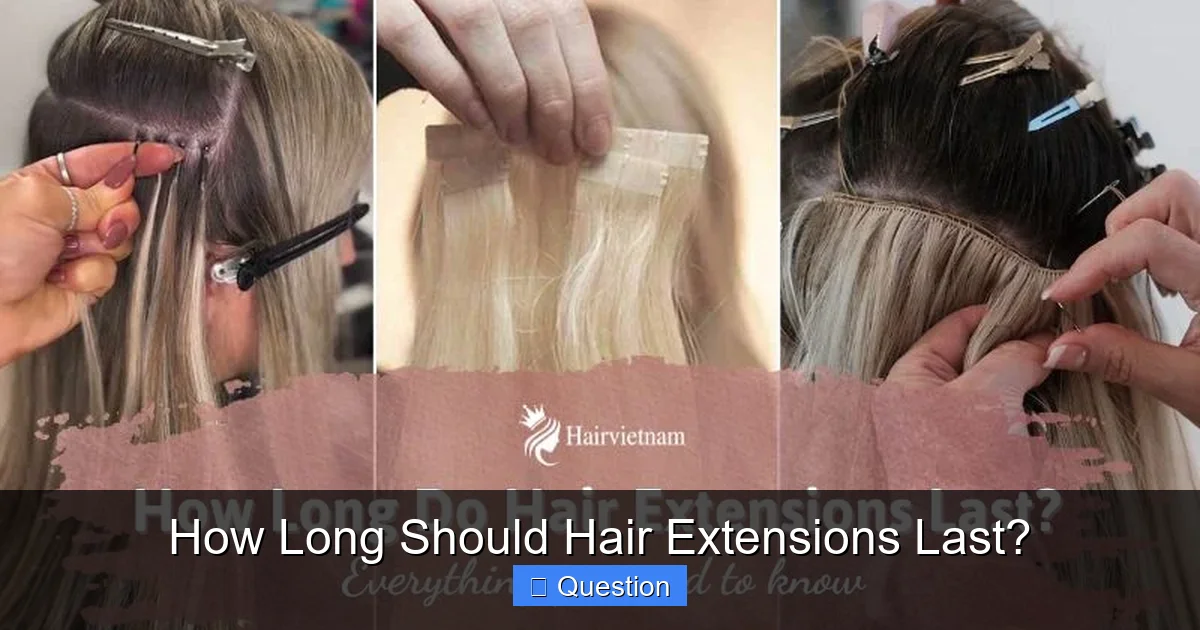
The first major factor in determining how long your hair extensions will last is the method of application. Each type has its own recommended lifespan, designed to keep both the extensions and your natural hair healthy.
Clip-In Extensions: Daily Glamour
Clip-in extensions are the ultimate commitment-phobes dream. Designed for temporary wear, you can clip them in for an event, a night out, or even just a day when you want extra flair, and then remove them before bed. Because they aren’t subjected to daily washing, styling, and friction while you sleep, good quality clip-ins can last anywhere from 6 months to over a year with proper care. It truly depends on how often you wear them and how you store and wash them.
Tape-In Extensions: A Few Weeks of Volume
Tape-in extensions are popular for their relatively quick application and comfortable wear. They involve sandwiching small sections of your natural hair between two wefts of extension hair using a strong, medical-grade adhesive tape. Typically, tape-ins last about 4 to 8 weeks before needing to be professionally removed and reinstalled closer to the scalp. The hair itself, if it’s good quality, can often be reused 2-3 times, meaning the same set of hair can last 3 to 6 months with proper maintenance and re-applications.
Sew-In Weaves/Braids (Wefts): The Classic Long-Haul
Sew-in weaves are one of the oldest and most popular extension methods, particularly for those with thicker hair. Your natural hair is braided into cornrows close to the scalp, and then wefts of extension hair are sewn onto these braids. Sew-ins are known for their durability and can typically last anywhere from 6 to 10 weeks. Going beyond this timeframe can put undue stress on your natural hair and scalp, and make washing difficult. The hair itself, especially high-quality human hair, can often be reused multiple times, potentially lasting 6 months to a year or more with proper care between installations.
Fusion (Keratin Bond) Extensions: Semi-Permanent Style
Fusion extensions (also known as bond extensions or pre-bonded extensions) involve individual strands of extension hair that have a keratin bond at the tip. These bonds are gently melted and molded around small sections of your natural hair using heat. This method offers a very natural look and feel and can last a significant amount of time, typically 3 to 5 months, before needing professional removal. The key here is that as your natural hair grows, the bonds move further from the scalp, which means they can’t be simply tightened; they must be removed and new ones applied.
Micro-Link/I-Tip Extensions: No Heat, No Glue
Micro-link extensions (also called I-tips or cold fusion) are similar to fusion in that individual strands are applied, but instead of heat, a tiny silicone-lined metal bead or link is used to clamp the extension strand to a small section of your natural hair. This method avoids heat and glue, making it a favorite for many. Micro-links can last about 2 to 4 months. They often require maintenance appointments every 4-8 weeks to slide the beads back up closer to the scalp as your hair grows. Like fusion, new hair can be applied once the original hair becomes too worn or grows out too far.
Nano-Tip Extensions: The Discreet Option
Nano-tip extensions are a newer, even more discreet version of micro-links, using tiny, virtually undetectable rings (up to 90% smaller than micro-rings) to attach individual strands. Due to their small size, they offer exceptional flexibility and a natural look. Their lifespan is similar to micro-links, generally lasting 2 to 4 months with maintenance appointments every 6-8 weeks for repositioning.
Quality Matters: The Role of Hair Type and Craftsmanship
Beyond the application method, the inherent quality of the hair itself plays a monumental role in how long your hair extensions last. Skimping on quality often leads to a shorter, less satisfying experience.
Visual guide about How Long Should Hair Extensions Last?
Image source: bigghair.ng
Human Hair vs. Synthetic Hair: A Clear Winner
This is perhaps the most significant distinction.
- Human Hair Extensions: These are made from real human hair, which means they can be styled with heat tools (curled, straightened), colored, and generally behave like your own hair. High-quality human hair extensions, especially Remy hair, will always last significantly longer, often for several months to over a year with good care. They maintain their luster, softness, and natural movement.
- Synthetic Hair Extensions: Made from various plastic fibers, synthetic hair is much more affordable but also much less durable. It often can’t be heat-styled (or only with very low heat), tangles easily, and has a shorter lifespan, typically only a few weeks to a couple of months at best. If you’re wondering how long should hair extensions last, synthetic hair is always at the lower end of the spectrum.
Remy vs. Non-Remy Human Hair: The Cuticle Difference
Even within human hair, there are levels of quality.
- Remy Hair: This is the gold standard. Remy hair means that all the hair cuticles (the outermost layer of the hair strand) are intact and aligned in the same direction, just like natural hair growing from your scalp. This alignment prevents tangling, matting, and gives the hair a natural shine and softness. Remy hair extensions are more expensive but offer superior durability and a much longer lifespan. They genuinely answer the question of how long should hair extensions last with “a very long time!”
- Non-Remy Hair: In non-Remy hair, the cuticles are not aligned, or they may even be stripped away. This hair is often collected from various sources and can be prone to tangling, matting, and frizzing very quickly. While cheaper upfront, it will not last as long and requires more effort to maintain, often leading to frustration.
Craftsmanship of the Bonds/Attachments: Structural Integrity
The quality of the bonds, tapes, or weft stitching also affects longevity. Poorly made tape-ins might have weak adhesive, causing them to slip prematurely. Fusion bonds might crumble or loosen if the keratin isn’t of good quality. Wefts that are thin or poorly stitched can shed excessively. A reputable brand and professional installer will prioritize quality components, ensuring the attachment method holds up for its intended lifespan.
Lifestyle and Maintenance: The Secret to Longevity
You’ve chosen high-quality hair extensions and had them expertly installed. Now, the ball is in your court! Your daily habits and maintenance routine are crucial in determining how long your hair extensions last. Think of them as an investment that needs ongoing care.
Washing and Conditioning Habits: Gentle is Best
- Frequency: Don’t overwash. Aim for 2-3 times a week, or less if possible.
- Products: Always use sulfate-free and alcohol-free shampoos and conditioners. Sulfates can strip the hair of its natural oils (and the oils from the extensions), leading to dryness and frizz, and can even weaken bonds.
- Technique: Wash gently in a downward motion. Don’t scrub vigorously at the roots, especially with bonded or taped extensions, as this can loosen them. Focus conditioner from the mid-shaft down, avoiding the roots entirely for most semi-permanent methods. Rinse thoroughly.
Styling and Heat Protection: Preserve Your Locks
- Heat Tools: Minimize heat styling whenever possible. When you do use heat, always apply a good quality heat protectant spray first. Use lower heat settings, especially with flat irons and curling wands.
- Brushing: Use a specialized extension brush (like a loop brush or soft bristle brush) that won’t pull or snag at the bonds. Always brush from the bottom up, gently detangling knots as you go, and support the roots with your free hand.
- Tight Styles: Avoid excessively tight ponytails, buns, or braids that can pull on the extension bonds and cause tension on your natural hair.
Sleeping Habits: Protect Your Investment
Sleeping can cause tangling and matting, reducing how long your hair extensions last.
- Braid or Ponytail: Before bed, gently braid your hair or tie it into a loose low ponytail. This prevents excessive friction and tangling while you sleep.
- Silk Pillowcase: Invest in a silk or satin pillowcase. The smooth surface reduces friction, static, and tangling compared to cotton.
- Never Sleep with Wet Hair: Always ensure your extensions are completely dry before going to bed. Wet hair is more fragile and prone to matting and bacterial growth.
Swimming and Sun Exposure: Proceed with Caution
- Chlorine & Salt Water: Both can be very drying and damaging to extensions, causing them to become brittle, discolored, and matted. If you swim, wet your hair with tap water first and apply a leave-in conditioner to create a barrier. Braid your hair and try to keep it out of the water. Rinse immediately and thoroughly after swimming.
- UV Rays: Prolonged sun exposure can dry out and fade extension hair. Consider wearing a hat or using UV-protective hair products, especially during peak sun hours.
Product Choices: Feed Your Hair Right
Beyond shampoo and conditioner, choose products specifically designed for extensions or those that are lightweight and moisturizing. Avoid heavy oils, silicones, or products with high alcohol content, especially near the bonds or tapes, as these can cause slippage or breakdown. A good leave-in conditioner or light hair oil applied to the ends can help keep your extensions soft and shiny.
Professional Care and Reapplication
While DIY might save a few bucks initially, professional care is invaluable for the longevity and health of your extensions and natural hair. It’s a key factor in ensuring how long your hair extensions last optimally.
Initial Installation by a Pro: The Foundation
This cannot be stressed enough. Professional installation ensures that the extensions are applied correctly, securely, and in a way that minimizes damage to your natural hair. A skilled stylist will assess your hair type, choose the right weight and placement of extensions, and ensure proper sectioning and tension. Incorrect installation can lead to discomfort, damage, and premature slippage, drastically reducing how long your hair extensions last.
Regular Maintenance Appointments: Keeping Things Fresh
For semi-permanent extensions like tape-ins, micro-links, and fusion, regular maintenance appointments are non-negotiable.
- Tape-Ins: Need to be removed and re-taped every 4-8 weeks as your hair grows. Your stylist will safely remove them, clean your hair, and re-tape the wefts closer to your scalp.
- Micro-Links/Nano-Tips: Require “push-up” appointments every 6-8 weeks, where the beads are gently opened, slid up, and re-clamped closer to the scalp. This prevents them from sagging and keeps them discreet.
- Sew-Ins: Need to be taken out and re-braided/re-sewn every 6-10 weeks. This allows your natural hair and scalp to breathe and prevents matting at the roots.
These appointments prevent matting, relieve tension, and ensure the extensions continue to look seamless and feel comfortable. Neglecting them will significantly shorten how long your hair extensions last in a wearable state.
Timely Reapplication: Preventing Damage
When your stylist recommends removal or reapplication, listen to them. Overdue extensions can cause several problems:
- Matting & Tangling: As your natural hair grows, the extension bonds move further down, creating more opportunity for new growth to tangle around the bonds, leading to matting.
- Tension & Breakage: Old, heavy extensions can put excessive strain on your natural hair strands, leading to breakage and even traction alopecia (hair loss due to prolonged pulling).
- Unnatural Look: As extensions grow out, they become more visible and less natural-looking.
Following your stylist’s advice for reapplication not only keeps your extensions looking great but, more importantly, protects the health of your natural hair underneath.
Recognizing When It’s Time for Removal or Replacement
Even with the best care, all good things must come to an end. Knowing when your extensions are reaching their limit is crucial for maintaining your hair’s health and your desired look. If you’re wondering how long should hair extensions last, pay attention to these signs:
Signs of Wear and Tear: When Extensions Are Tired
- Excessive Shedding: While some shedding is normal, if your extensions are shedding significantly more than usual, it’s a sign they’re wearing out.
- Dryness, Frizz, & Brittleness: If your extensions feel perpetually dry, start looking frizzy even after conditioning, or become brittle and prone to breakage, their lifespan is nearing its end.
- Matting & Tangling: Despite careful brushing, if your extensions are constantly tangling or matting, especially near the roots or ends, it’s a clear indication of wear.
- Discomfort or Itchiness: While some initial discomfort is normal, persistent itching, pulling, or tenderness can mean the extensions are overdue for maintenance or removal.
- Loss of Luster: High-quality extensions initially have a beautiful shine. If they’ve become dull and lifeless, even with good products, they’re likely past their prime.
Impact on Natural Hair: Don’t Let Them Overstay
One of the biggest mistakes people make is trying to extend the life of their extensions past the recommended time frame. Overdue extensions can:
- Cause Damage: The weight and pull on your natural hair can lead to breakage, thinning, and even bald spots if left in too long.
- Trap Debris: Overgrown bonds can trap dirt, oil, and dead skin cells, making it difficult to properly cleanse your scalp and potentially leading to irritation or infection.
- Create Matting: Your natural hair continues to shed daily, but when extensions are in, that shed hair has nowhere to go. It can accumulate and form dense mats around the bonds, which can be very difficult and painful to remove, often resulting in natural hair loss during the process.
Regularly assessing the state of your extensions and your natural hair will help you know exactly how long should hair extensions last for you personally before they become a detriment.
The “Grow-Out” Factor: Natural Hair Dictates Removal
For most semi-permanent extensions, the primary reason for removal or reapplication is simply the growth of your natural hair. As your hair grows, the bonds or tapes move further away from your scalp. This makes them more visible, puts more strain on your hair, and can cause them to tangle more easily. Your stylist will advise you on the optimal “grow-out” period for your specific extension type to ensure both aesthetics and hair health.
Conclusion
So, how long should hair extensions last? As we’ve seen, there’s no single answer, but rather a spectrum determined by a blend of factors: the type of extension, the quality of the hair, your daily maintenance routine, and the expertise of your stylist. From temporary clip-ins lasting months to semi-permanent methods that need reapplication every few weeks or months, each option offers a unique timeline.
The bottom line is this: investing in high-quality extensions made from Remy human hair, having them professionally installed, and committing to a diligent aftercare routine will always yield the best results and dramatically extend their lifespan. Don’t skimp on products, don’t skip your maintenance appointments, and always listen to your stylist’s advice. By doing so, you’ll not only enjoy beautiful, long-lasting hair extensions but also ensure the health and integrity of your natural hair underneath.
Hair extensions are a fantastic way to transform your look, but like any beauty investment, they thrive on proper care. With the right approach, you can keep your extensions looking fabulous for as long as possible, making every penny (and minute!) you spend truly worthwhile.
Frequently Asked Questions
How often should I wash my hair with extensions?
It’s generally recommended to wash your hair extensions every 2-3 days, or even less frequently if possible. Overwashing can strip the hair of natural oils and weaken bonds, so extending time between washes helps preserve their life and appearance.
Can I color or bleach my hair extensions?
If you have 100% human hair extensions, they can often be colored, but it’s crucial to consult a professional stylist. Bleaching is not recommended for extensions as it can severely damage them and reduce their lifespan, as they don’t receive natural nutrients from the scalp.
What products should I avoid using on my extensions?
Always avoid products containing sulfates, parabens, and heavy alcohols, as these can dry out the extension hair and break down adhesives or bonds. Steer clear of heavy oils or silicone-based products near the roots or attachment points, as they can cause slippage.
Is it normal for extensions to shed?
Yes, some shedding is normal, especially during the first few washes and over time, similar to natural hair. However, excessive shedding could indicate poor quality hair, weak bonds, or improper care, which might reduce how long your hair extensions last.
Can I go swimming with hair extensions?
You can swim with most types of extensions, but it’s best to minimize exposure to chlorine and saltwater, which can cause dryness and damage. Wet your hair with fresh water and apply a leave-in conditioner before swimming, then rinse immediately afterward.
How do I prevent my extensions from tangling while I sleep?
To prevent tangling, gently brush your extensions before bed and loosely braid them or tie them into a low ponytail. Sleeping on a silk or satin pillowcase can also significantly reduce friction and help keep your extensions smooth and knot-free.
As an Amazon Associate, We earn from qualifying purchases.