
How to Test Hair Porosity?
As an Amazon Associate, We earn from qualifying purchases.
Understanding your hair’s porosity is a game-changer for its health and appearance. Hair porosity refers to your hair’s ability to absorb and retain moisture, determined by how open or closed its outer cuticle layer is. By learning how to test hair porosity, you can accurately identify whether your hair is low, medium, or high porosity, empowering you to choose the perfect products and routine tailored to its unique needs.
How to Test Hair Porosity?
Hey there, fellow hair enthusiast! Have you ever wondered why some hair products work wonders for your friends but leave your own locks looking lackluster? Or why your hair always feels dry, no matter how much conditioner you slather on? The secret might just be your hair porosity. It’s one of the most fundamental aspects of understanding your hair’s unique needs, and honestly, it’s a game-changer!
Hair porosity simply refers to your hair’s ability to absorb and retain moisture. Think of your hair strands like tiny sponges. Some sponges soak up water instantly, others resist it, and some hold onto it just right. Your hair acts similarly! Discovering your hair’s porosity type is like unlocking a secret code that tells you exactly what kind of products, ingredients, and care routine will make your hair thrive. Ready to crack that code? Let’s dive into how to test hair porosity and transform your hair care journey!
Key Takeaways
- What is Hair Porosity: Hair porosity describes your hair’s ability to absorb and hold onto moisture, which is dictated by the condition of its outermost layer, the cuticle.
- Why It Matters: Knowing your hair porosity is crucial because it helps you select the most effective hair care products and develop a routine that genuinely works for your hair type, preventing issues like dryness, frizz, or product buildup.
- The Float Test is Key: The most reliable and widely used method to test hair porosity involves placing a clean strand of hair into a glass of water and observing if it floats, sinks, or hovers.
- Other Helpful Tests: Complementary methods include the spray test (observing how quickly water is absorbed) and the strand test (feeling the hair’s texture) for a more comprehensive understanding.
- Low Porosity Hair: Characterized by tightly closed cuticles, it resists moisture but can suffer from product buildup. It benefits from lightweight products and gentle heat.
- Medium Porosity Hair: Features slightly open cuticles, allowing for good moisture absorption and retention. It’s often considered the “ideal” and is relatively easy to manage.
- High Porosity Hair: Has open or damaged cuticles, absorbing moisture quickly but losing it just as fast. It needs heavier, moisture-sealing products and protein treatments.
- Tailor Your Routine: Once you determine your porosity, adjust your shampoos, conditioners, styling products, and application techniques to specifically cater to your hair’s unique absorption and retention capabilities for optimal health and appearance.
📑 Table of Contents
What Exactly is Hair Porosity and Why Does It Matter?
Before we jump into how to test hair porosity, let’s get a clear picture of what it is. Your hair is made up of three main layers: the medulla (innermost core, not always present), the cortex (the middle layer, providing strength and elasticity), and the cuticle (the outermost protective layer). Porosity is all about that cuticle layer.
The Hair Cuticle: Your Hair’s Gatekeeper
Imagine your hair’s cuticle as a series of tiny, overlapping scales, much like shingles on a roof. These scales can be tightly closed, slightly raised, or wide open. The way these scales are positioned determines how easily moisture (and products) can enter and exit your hair shaft. Factors like genetics, heat styling, chemical treatments, and environmental damage can all influence the state of your cuticles and, therefore, your hair’s porosity.
Why Porosity is Your Hair’s Secret Code
Knowing your hair’s porosity isn’t just a fun fact; it’s essential for creating an effective hair care routine.
- Product Absorption: If your cuticles are tightly closed, products might just sit on top of your hair. If they’re wide open, products might penetrate too quickly and escape just as fast.
- Moisture Retention: High porosity hair struggles to hold onto moisture, leading to dryness and frizz. Low porosity hair can repel moisture, making it hard to hydrate.
- Ingredient Needs: Certain ingredients work better for different porosity types. For example, some hair types benefit from heavier oils, while others need lighter humectants.
- Overall Hair Health: When you match your hair care to your porosity, you reduce dryness, frizz, breakage, and improve elasticity, shine, and manageability.
Understanding how to test hair porosity puts you in the driver’s seat of your hair health.
The Different Types of Hair Porosity
There are three main categories of hair porosity: low, medium, and high. Each type has distinct characteristics and responds best to specific care approaches.
Low Porosity Hair
If you have low porosity hair, your cuticles are tightly packed and lie flat. This means it’s challenging for moisture to penetrate the hair shaft. Think of it like a perfectly sealed roof – water just runs off!
Visual guide about How to Test Hair Porosity?
Image source: i.pinimg.com
- Characteristics: Your hair tends to resist water when you try to wet it, and products often sit on top of your strands, leading to buildup. It takes a long time for your hair to get fully wet and even longer to air dry. It can feel smooth but might also feel stiff or dry because moisture isn’t getting in.
- Care Considerations: This hair type benefits from lightweight, water-based products that can easily penetrate. Gentle heat (like a warm towel or steamer) can help open the cuticles during deep conditioning. Clarifying shampoos are important to prevent buildup.
Medium Porosity Hair
Considered the “ideal” porosity, medium porosity hair has cuticles that are slightly lifted, allowing for a good balance of moisture absorption and retention. It’s like a perfectly maintained roof that lets in just enough light and air.
- Characteristics: Your hair absorbs moisture well and retains it for a reasonable amount of time. It tends to hold styles well, looks healthy, and has a good amount of shine and elasticity. You might not experience significant dryness or excessive product buildup.
- Care Considerations: This hair type is relatively easy to manage. The key is to maintain its health and protect it from damage. Use balanced products, avoid excessive heat, and incorporate occasional protein treatments to maintain strength.
High Porosity Hair
High porosity hair has cuticles that are widely open, often due to damage (chemical processing, heat styling) or genetics. This means moisture can easily enter, but it escapes just as quickly. It’s like a roof with missing shingles – everything gets in and out too fast!
- Characteristics: Your hair absorbs water and products very quickly, but also dries out very fast. It’s prone to frizz, tangles easily, and can look dull or feel rough. It might also be more susceptible to breakage and damage.
- Care Considerations: This hair type thrives on heavier, moisture-rich products like creams, butters, and oils to seal in hydration. Protein treatments are essential to fill in gaps in the cuticle. Using cool water rinses can help close the cuticle.
How to Test Hair Porosity: The Float Test (The Gold Standard)
Now for the moment you’ve been waiting for! The float test is the most popular and generally reliable method to determine your hair porosity. It’s simple, quick, and requires minimal tools.
What You’ll Need
- A clean, clear glass or bowl of room temperature water.
- A single strand of clean hair (free of product).
- A timer (your phone will do!).
Step-by-Step Instructions
- Wash Your Hair: It’s crucial to start with clean hair. Product buildup, oils, or conditioners can interfere with the test’s accuracy. Wash and rinse your hair thoroughly, then let it air dry completely without any styling products.
- Obtain a Clean Strand: Gently pull a single strand of hair from your head, or collect one that naturally falls out while brushing. Make sure it’s not a broken piece, but a full strand from root to tip.
- Place in Water: Carefully drop the strand of hair into the glass of room temperature water. Don’t push it down; just let it float naturally on the surface.
- Observe and Wait: Set a timer for 2-4 minutes. Watch how the hair strand behaves during this time.
Interpreting Your Results
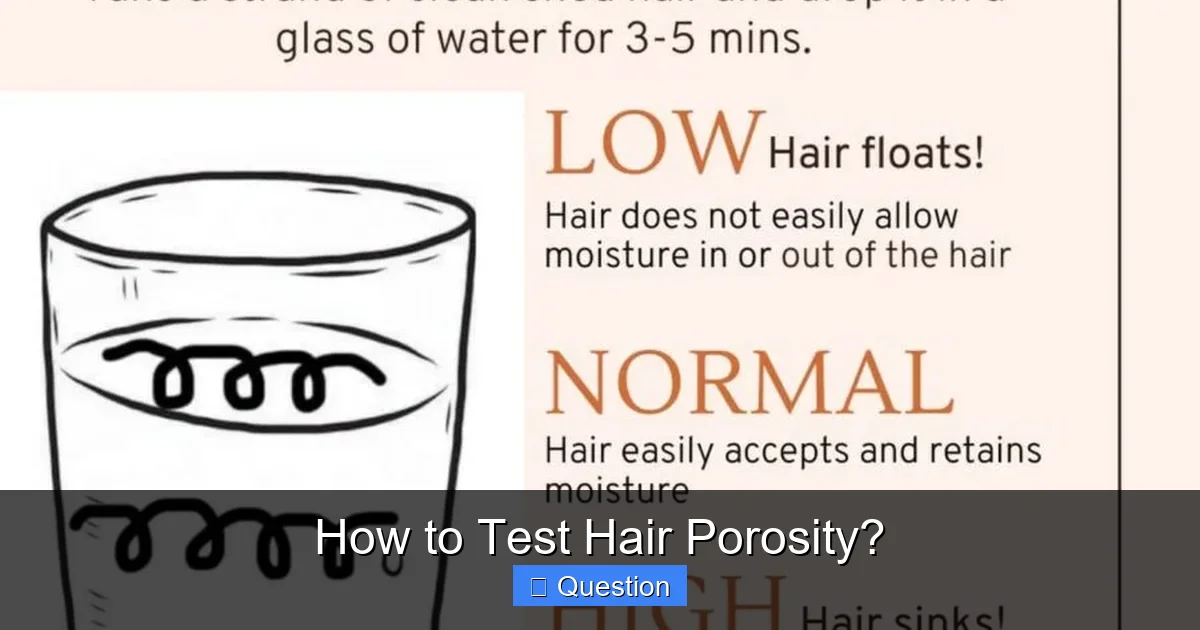
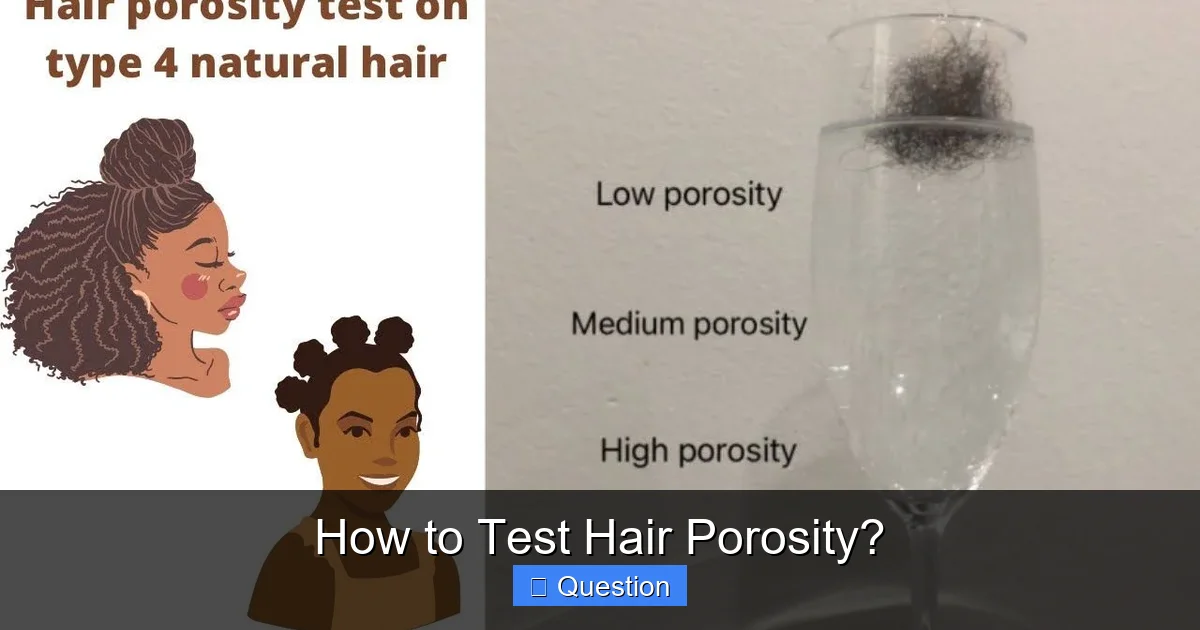
- Floats at the Top (Low Porosity): If your hair strand remains floating at the surface of the water after 2-4 minutes, you likely have low porosity hair. Its tightly closed cuticles prevent water from easily penetrating, causing it to stay afloat.
- Sinks Slowly/Hovers in the Middle (Medium Porosity): If your hair strand slowly sinks, or hovers somewhere in the middle of the glass, you probably have medium porosity hair. Its balanced cuticles allow for steady water absorption.
- Sinks Quickly to the Bottom (High Porosity): If your hair strand immediately sinks to the bottom of the glass, you most likely have high porosity hair. Its open cuticles quickly absorb water, causing it to become saturated and sink.
Tips for Accuracy
- Use Clean Hair: This cannot be stressed enough. Any oils or products on the hair can affect its buoyancy and give you a false reading.
- Room Temperature Water: Extreme water temperatures can temporarily affect the cuticle, so room temperature is best.
- Be Patient: Give the test the full 2-4 minutes for an accurate reading.
- Test Multiple Strands: Your hair porosity can vary across your head. Try testing strands from different areas (front, back, sides) to get a more comprehensive idea.
Other Ways to Test Hair Porosity (Complementary Methods)
While the float test is generally the most reliable, there are a couple of other methods you can use to confirm your findings or get a quicker sense of your hair’s porosity.
The Spray Test
This test is great for a quick visual cue.
- Spray Water: Take a small section of clean, dry hair and spritz it with water from a spray bottle.
- Observe:
- Low Porosity: Water beads up on the surface and takes a while to absorb.
- Medium Porosity: Water is absorbed fairly quickly, but doesn’t disappear instantly.
- High Porosity: Water is absorbed almost immediately, and the hair might still feel a bit dry shortly after.
The Strand Test (Feel Test)
This is a tactile way to assess your hair’s cuticle.
- Hold a Strand: Take a single strand of clean hair.
- Run Fingers Up: Gently slide your fingers from the tip of the hair strand up towards the scalp.
- Interpret:
- Low Porosity: Your fingers will glide smoothly, indicating flat cuticles.
- Medium Porosity: You might feel a slight bumpiness, indicating slightly raised cuticles.
- High Porosity: Your fingers will feel distinct bumps or roughness, signifying open or lifted cuticles.
The Product Test
This is more of an ongoing observation rather than a single test, but it’s very telling.
- Low Porosity: Products tend to sit on top of your hair, leaving it feeling greasy or heavy, even after using small amounts. It takes a lot of effort for your hair to feel moisturized, and you might experience buildup quickly.
- Medium Porosity: Products are absorbed well, and your hair generally feels hydrated and balanced without feeling heavy or dry.
- High Porosity: Products are absorbed very quickly, but your hair can still feel dry and thirsty shortly after application. It might take a lot of product to feel truly moisturized, and your hair gets wet very easily.
Tailoring Your Hair Care Routine Based on Porosity
Once you’ve determined how to test hair porosity and found your hair’s type, it’s time to put that knowledge into action!
For Low Porosity Hair
- Shampoos: Look for clarifying or lightweight shampoos to prevent buildup. Avoid heavy ingredients like shea butter or coconut oil in your shampoo.
- Conditioners & Treatments: Use lightweight, humectant-rich conditioners (glycerin, honey, aloe vera) that draw moisture into the hair. Deep condition with gentle heat (like a steam cap or warm towel) to help open the cuticles.
- Styling Products: Opt for water-based leave-ins, lotions, and mousses. Apply products to damp, not soaking wet, hair for better absorption.
- Application Tips: Work products into small sections. Rinse with warm water to help cuticles open, and finish with a cool rinse to seal.
For Medium Porosity Hair
- Shampoos & Conditioners: You have the most flexibility! Use balanced, hydrating products. You might not need clarifying as often as low porosity hair.
- Treatments: Incorporate protein treatments occasionally (every 4-6 weeks) to maintain strength and elasticity, especially if you color or heat style.
- Styling Products: Again, you have a wide range of options. Focus on products that maintain moisture and protect against environmental damage.
- Application Tips: Maintain a consistent routine. Use heat protectants when styling with heat.
For High Porosity Hair
- Shampoos: Use moisturizing, sulfate-free shampoos to avoid stripping natural oils.
- Conditioners & Treatments: Heavily moisturizing, protein-rich conditioners are your best friend. Look for ingredients like shea butter, coconut oil, argan oil, and ceramides. Deep condition regularly (weekly) and use leave-in conditioners.
- Styling Products: Heavier creams, butters, and oils are excellent for sealing in moisture. The LOC (Liquid, Oil, Cream) or LCO (Liquid, Cream, Oil) method can be highly effective.
- Application Tips: Use cool water rinses to help close cuticles and seal in moisture. Minimize heat styling and be gentle with your hair, as it’s prone to breakage. Use protective styles.
Conclusion
Congratulations! You now have a solid understanding of what hair porosity is and, more importantly, how to test hair porosity effectively. This isn’t just a fun science experiment; it’s a vital piece of information that can completely revolutionize your hair care routine.
By knowing whether your hair has low, medium, or high porosity, you’re no longer guessing which products will work. You’re empowered to choose ingredients and techniques that directly cater to your hair’s unique structure, leading to healthier, happier, and more manageable locks. So go ahead, perform the float test, try the spray test, and start observing how your hair truly behaves. Embrace this knowledge, and get ready to unlock your hair’s full potential!
Frequently Asked Questions
What is hair porosity, and why is it important to know mine?
Hair porosity refers to your hair’s ability to absorb and retain moisture, determined by how open or closed its cuticle layer is. Knowing your porosity is crucial because it dictates which products and ingredients will effectively penetrate and hydrate your hair, preventing issues like dryness, frizz, or product buildup.
Can my hair porosity change over time?
Yes, your hair porosity can change due to various factors. Chemical treatments (like coloring or perms), excessive heat styling, mechanical damage, and even environmental exposure can cause your once healthy, medium porosity hair to become high porosity.
Is the float test really accurate for determining hair porosity?
The float test is widely considered the most reliable and popular method for determining hair porosity. However, for the most accurate results, ensure you use a clean strand of hair free of any product buildup, and observe for the recommended 2-4 minutes.
What if I have different porosities on different parts of my head?
It’s not uncommon to have varying porosities across your scalp, especially if some areas are more damaged (e.g., ends vs. roots). In such cases, you might need to tailor your product application, using heavier products on more porous sections and lighter ones elsewhere, or focusing on an overall “average” porosity.
What are the common signs of low porosity hair?
Low porosity hair typically resists water, takes a long time to get fully wet and air dry, and products tend to sit on top of it, leading to buildup. It often feels smooth but can appear dull or stiff because moisture struggles to penetrate.
What types of products are best for high porosity hair?
High porosity hair benefits from heavy, moisture-rich products like creams, butters, and oils to seal in hydration. Protein-rich conditioners and treatments are also essential to help fill gaps in the cuticles, improving strength and reducing frizz.
As an Amazon Associate, We earn from qualifying purchases.