
Why Do Moles Grow Hair?

As an Amazon Associate, We earn from qualifying purchases.
Have you ever noticed hair growing from a mole and wondered why? Moles grow hair because they contain active hair follicles, just like the surrounding skin. Often, the increased blood supply and cellular activity within a mole can even stimulate these hairs to grow thicker or darker. Crucially, a mole growing hair is almost always a normal, benign characteristic and not a sign of anything dangerous.
Picture this: You’re doing your routine skin check, maybe getting ready in the morning, and you notice a tiny, dark hair sprouting right out of a mole on your arm or leg. Perhaps it’s a prominent mole on your face that has decided to become a host for a rather sturdy strand of hair. It’s a common, if slightly curious, observation that often sparks a question: “Why do moles grow hair?”
It’s a completely natural thing to wonder about, and you’re not alone. Many people find themselves pondering this exact mystery. Moles themselves are a fascinating part of our skin’s landscape, and when they start producing hair, it can add an extra layer of intrigue. Is it normal? Is it a bad sign? Should I be worried?
Well, let’s put your mind at ease right from the start. A mole growing hair is, in the vast majority of cases, a perfectly normal, benign characteristic. It’s usually a sign of a healthy, active mole. But understanding why this happens can help demystify the process and give you confidence about your skin health. Join us as we dive into the fascinating world of moles and the hair they sometimes decide to sprout.
Key Takeaways
- Hair Follicles are Key: Moles grow hair because they develop in areas of the skin where active hair follicles already exist, incorporating them into the mole’s structure.
- Increased Activity: Moles often have a richer blood supply and higher cellular activity than surrounding skin, which can stimulate these embedded hair follicles to produce thicker, longer, or darker hairs.
- Usually Benign: The presence of hair growing from a mole is overwhelmingly a sign of a benign (non-cancerous) mole and generally indicates a healthy, active mole.
- Not a Danger Sign: Contrary to some myths, a mole growing hair is not a sign of melanoma or skin cancer; in fact, cancerous moles are less likely to grow hair due to disorganized cell growth.
- Safe Hair Removal: If you wish to remove hair from a mole, gentle methods like trimming or shaving are safe. Avoid plucking or waxing, which can cause irritation or ingrown hairs.
- Monitor the Mole, Not Just the Hair: While hair itself isn’t a concern, it’s essential to regularly check the mole for changes in size, shape, color, or texture (using the ABCDE method), as these are the true indicators of potential issues.
- Dermatologist Consultation: Always consult a dermatologist if you have concerns about a mole, especially if it changes, bleeds, itches, or causes discomfort, regardless of whether it grows hair.
📑 Table of Contents
Understanding Moles: A Quick Refresher
Before we tackle the hair situation, let’s briefly revisit what moles actually are. Think of them as tiny, often harmless, communities of cells on your skin.
What Exactly is a Mole?
In medical terms, a mole is known as a nevus (plural: nevi). It’s essentially a common type of skin growth that appears when melanocytes – the cells responsible for producing melanin, the pigment that gives our skin its color – grow in clusters instead of being spread throughout the skin. These clusters form the dark spots we recognize as moles. Moles can be flat or raised, smooth or rough, and their color can range from pinkish to brown or black.
The Role of Skin and Hair Follicles
Our skin is a complex organ, and it’s covered in tiny structures called hair follicles. These follicles are like miniature organs embedded in the skin, each capable of growing a single strand of hair. They are everywhere on our bodies, except for places like the palms of our hands and the soles of our feet. When a mole develops, it doesn’t just form on top of the skin; it’s an integral part of the skin’s structure, often developing within the layers where these hair follicles reside.
The Science Behind Hairy Moles
Now for the main event: why do moles grow hair? It all boils down to the biology of your skin and the unique environment within a mole itself.
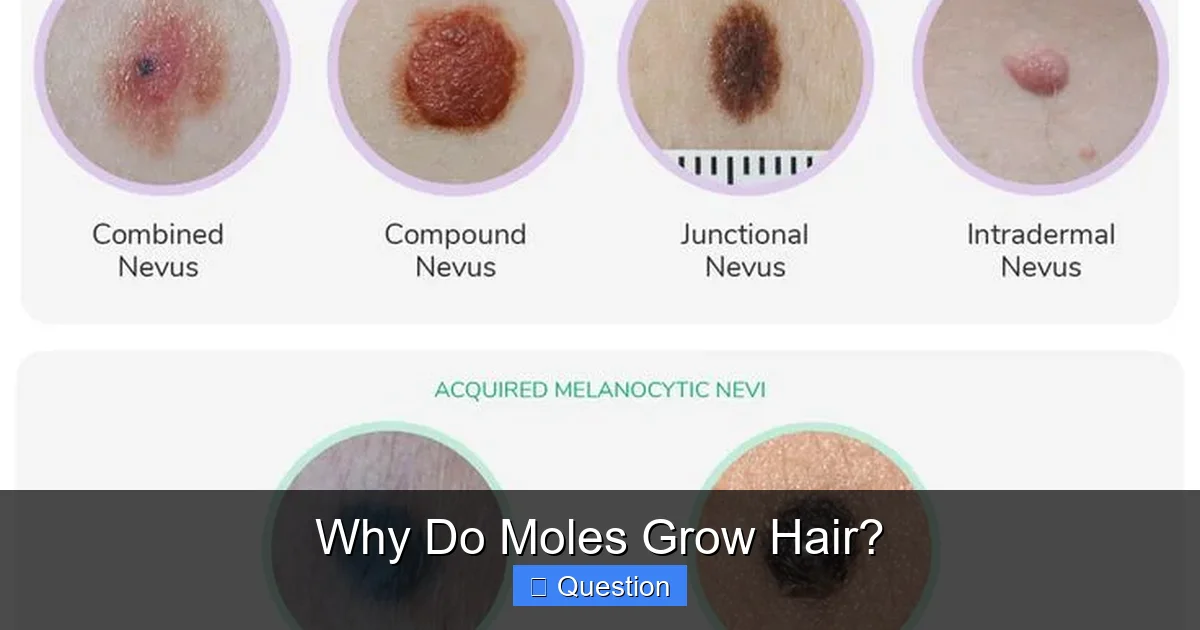
Visual guide about Why Do Moles Grow Hair?
Image source: i.pinimg.com
Hair Follicles Within Moles
The most straightforward answer is this: moles grow hair because they often encapsulate hair follicles. When a mole forms, it doesn’t necessarily push aside existing hair follicles. Instead, it can grow around and incorporate them into its structure. So, if a hair follicle was present in that particular spot of skin before the mole developed, it’s quite likely that the follicle will continue to function and produce hair, even from within the mole.
It’s like building a new house around an existing garden. The garden (hair follicle) is still there, and it will continue to grow, even though a new structure (the mole) has appeared around it. These hairs are simply the natural output of those embedded follicles.
Increased Blood Supply and Cellular Activity
Here’s another key piece of the puzzle: moles often have a richer blood supply than the surrounding skin. Because they are areas of increased cellular activity – where melanocytes are clustered and actively growing – the body often sends more nutrients and oxygen to these spots via increased blood flow. This enhanced circulation can act as a stimulant for the hair follicles embedded within the mole. Just like a well-watered plant, the hair follicles get an extra boost, leading to more vigorous hair growth.
This increased activity can sometimes make the hair growing from a mole appear different from the surrounding hairs. You might notice that the hair is thicker, coarser, darker, or grows longer than hair on other parts of your skin. This isn’t usually a cause for concern; it’s just another symptom of that boosted cellular activity.
Hormonal Influence
Our bodies are constantly influenced by hormones, and these chemical messengers play a significant role in both mole formation and hair growth. Hormonal fluctuations, which occur throughout life (during puberty, pregnancy, or aging), can affect the activity of melanocytes and hair follicles. For instance, some moles may appear or darken during pregnancy due to hormonal shifts. Similarly, these hormones can sometimes stimulate the hair follicles within moles, leading to more noticeable hair growth.
Cell Concentration and Activity
Beyond melanocytes, moles are areas where other skin cells might also be more concentrated and active. This overall bustling environment within a mole, with its increased cellular division and metabolic processes, can create an ideal micro-environment for robust hair production. Essentially, the mole is a ‘busy’ part of the skin, and this busyness extends to its hair-producing capabilities.
Is a Hairy Mole a Bad Sign? Debunking Myths
Let’s address one of the biggest concerns head-on: is a mole growing hair a sign of cancer? The good news is, absolutely not. In fact, it’s often seen as a reassuring sign.
The Good News: Usually Harmless
Contrary to some old wives’ tales, a mole with hair is almost universally benign. Dermatologists often consider the presence of hair growing from a mole as a positive indicator, suggesting that the mole is stable and healthy. Malignant moles (melanomas) typically exhibit disorganized, rapid, and uncontrolled cell growth, which often disrupts the normal function of hair follicles. Therefore, cancerous moles are actually less likely to grow hair.
So, if you have a mole that sprouts a hair, you can generally breathe a sigh of relief. It’s just your body doing its thing, and that mole is probably just minding its own business, happily growing hair.
What to Really Look For: The ABCDEs
While hair on a mole is not a concern, it’s vital to know what *is* concerning. The key to monitoring moles for potential issues (like melanoma) is to look for changes in the mole itself, using the well-known “ABCDE” rule:
- A – Asymmetry: One half of the mole doesn’t match the other.
- B – Border: The edges are irregular, ragged, notched, or blurred.
- C – Color: The color is not uniform and may include shades of brown or black, or patches of pink, red, white, or blue.
- D – Diameter: The spot is larger than 6 millimeters (about the size of a pencil eraser), though melanomas can be smaller.
- E – Evolving: The mole is changing in size, shape, color, or elevation, or any new symptom appears, such as bleeding, itching, or crusting.
If you notice any of these ABCDE signs, regardless of whether your moles grow hair, it’s time to see a dermatologist promptly.
Dealing with Hairy Moles: Practical Advice
So, you have a mole with hair. What now? The decision to remove the hair, or even the mole itself, is often a personal one, driven by aesthetics rather than medical necessity.
To Remove or Not to Remove the Hair?
This is purely a cosmetic choice. From a medical standpoint, there’s no need to remove hair from a mole unless it’s causing discomfort or irritation. However, if you find the hair unsightly or simply prefer a smoother look, there are safe ways to deal with it.
Safe Hair Removal Methods
If you choose to remove the hair, gentleness is key. The best and safest methods include:
- Clipping or Trimming: This is arguably the safest method. Use a small pair of clean scissors (like cuticle scissors) to carefully snip the hair as close to the skin’s surface as possible. It’s quick, painless, and carries minimal risk of irritation.
- Shaving: You can carefully shave the hair using a clean razor, just as you would shave hair on other parts of your body. Be gentle to avoid nicking the mole itself. This method is also generally considered safe.
Both trimming and shaving are excellent choices because they only remove the hair above the skin’s surface, leaving the follicle intact and minimizing any disturbance to the mole. The hair will, of course, grow back, but you can repeat the process as needed.
Methods to Avoid
While tempting, certain hair removal methods should be avoided when dealing with hair growing from a mole:
- Plucking: Pulling hair directly from the follicle can cause irritation, inflammation, or even lead to ingrown hairs within the mole. This repeated trauma could, in theory, cause changes to the mole over time, though it’s not directly linked to increasing cancer risk. It’s best to err on the side of caution and avoid plucking.
- Waxing: Similar to plucking, waxing pulls hairs directly from the follicles and can be too harsh for the sensitive skin of a mole. It can cause significant irritation, redness, and potential damage.
- Hair Removal Creams (Depilatories): These chemical creams can be very irritating to the skin, and especially to the concentrated cells of a mole. They can cause chemical burns or allergic reactions.
- Laser Hair Removal: While generally safe for hair removal on regular skin, using laser treatments on a mole is usually not recommended without explicit dermatologist approval. The laser targets pigment, and since moles are highly pigmented, there’s a risk of altering the mole, causing burns, or obscuring changes that might be medically important to monitor.
When to Consult a Dermatologist
If you have any concerns about a mole, whether it has hair or not, always consult a dermatologist. Specifically, seek professional advice if:
- The mole changes in size, shape, color, or texture.
- It starts to bleed, itch, or cause pain.
- You are unsure if a mole is normal or concerning.
- You want to explore options for permanent hair removal or mole removal.
A dermatologist can accurately assess the mole and recommend the best course of action.
The Psychological Aspect: Embracing or Addressing
For many, a hairy mole isn’t just a biological curiosity; it can be a source of self-consciousness or even embarrassment. It’s perfectly okay to acknowledge these feelings.
Self-Consciousness and Moles
In a world saturated with images of “perfect” skin, having a prominent mole, especially one that grows hair, can sometimes make people feel self-conscious. It’s important to remember that moles are incredibly common, and many people have them. If a hairy mole is affecting your self-esteem, it’s valid to seek solutions. Talking to a dermatologist about your concerns isn’t just about medical health; it’s also about your mental well-being.
Cosmetic Removal Options for the Mole Itself
If simply removing the hair isn’t enough, and you wish to have the entire mole removed for cosmetic reasons, a dermatologist can discuss various options. These might include:
- Excisional Biopsy: The mole is surgically cut out and stitches are used to close the wound. This is a common method, especially if there’s any suspicion of abnormality, as it allows for lab analysis.
- Shave Excision: For raised moles, the mole can be shaved off flush with the skin using a surgical blade.
- Laser Removal: Less common for typical moles due to the pigmentation, but sometimes used for certain types of benign moles, particularly if they are flat. This would be decided by a specialist.
Any removal procedure should be performed by a qualified medical professional, and they will ensure the mole is examined to rule out any underlying issues before removal.
Prioritizing Skin Health Over Aesthetics
Ultimately, while cosmetic concerns are valid, the paramount priority should always be skin health. Regular self-skin exams and annual professional skin checks by a dermatologist are crucial for everyone, regardless of whether their moles grow hair. Early detection is key for successfully treating any potential skin cancers.
Conclusion
So, the next time you notice a mole growing hair, you’ll know exactly why it’s happening. It’s a fascinating display of your skin’s biology – a common, usually benign characteristic that simply means a hair follicle is doing its job from within a mole. The increased blood flow and cellular activity in the mole often give these hairs a little extra boost, making them noticeable.
Remember, the presence of hair on a mole is a normal occurrence and generally not a cause for alarm. Instead of worrying about the hair, focus on the overall health of your moles by performing regular self-checks and paying attention to the ABCDEs of melanoma. If you ever have any doubts or notice changes in a mole, don’t hesitate to consult a dermatologist. They are your best resource for accurate information and personalized care for all your skin concerns. Embrace your unique skin, understanding that every mole tells a story, and sometimes, that story includes a bit of hair!
Frequently Asked Questions
Is it safe to pull hair out of a mole?
No, it’s generally not recommended to pluck or wax hair from a mole. Pulling the hair can irritate the mole, potentially causing inflammation, bleeding, or even an ingrown hair, which can lead to discomfort or infection. It’s much safer to gently trim or shave the hair.
Does a mole growing hair mean it’s cancerous?
Absolutely not. In fact, the opposite is often true. A mole that grows hair is almost always benign (non-cancerous). Cancerous moles (melanomas) typically have disorganized cell growth that interferes with the normal function of hair follicles, making them less likely to grow hair.
Why do the hairs from a mole seem thicker or darker?
Hairs growing from moles can appear thicker, darker, or coarser due to the increased blood supply and heightened cellular activity within the mole. This rich environment can stimulate the hair follicles embedded within the mole, leading to more robust hair growth.
Can I remove the hair from a mole permanently?
Permanent hair removal methods like plucking, waxing, or laser treatments are generally not recommended for moles without a dermatologist’s consultation. These methods can irritate the mole or, in the case of laser, potentially alter the mole’s appearance or obscure any changes that should be monitored. Trimming or shaving are the safest temporary options.
When should I be concerned about a mole that grows hair?
You should be concerned about the mole itself, not specifically because it grows hair. Consult a dermatologist if the mole changes in size, shape, color, or texture; if it starts to itch, bleed, or cause pain; or if you notice any other unusual features following the ABCDE rule.
Will removing the hair from a mole make it grow back faster or thicker?
No, removing hair by trimming or shaving does not make it grow back faster or thicker. This is a common myth. The thickness and growth rate of hair are determined by your genetics and hormones, not by surface removal methods.
As an Amazon Associate, We earn from qualifying purchases.