
Do Native Americans Grow Facial Hair?
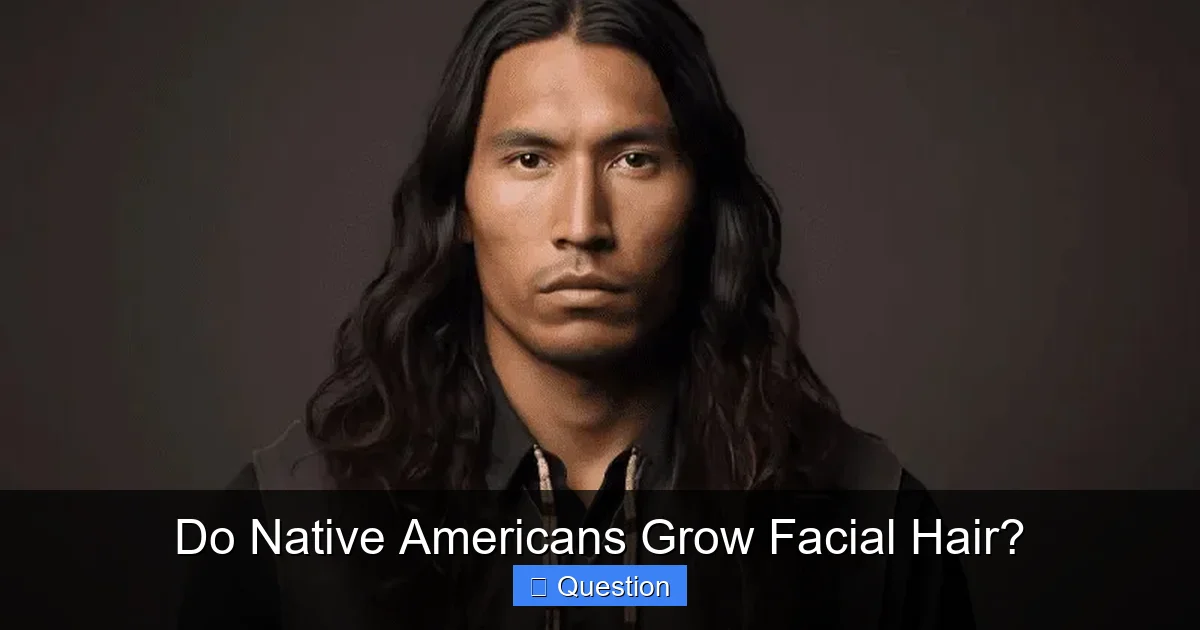
It’s a common query, and the answer is a resounding yes, Native Americans grow facial hair, though often less densely than men of European or some other ancestries. This difference is largely due to genetic factors shared with East Asian populations, alongside historical and cultural practices that favored a clean-shaven look. Modern individual expression means facial hair choices vary widely among Native men today.
Do Native Americans Grow Facial Hair?
It’s a question that often surfaces in discussions about appearance, heritage, and identity: Do Native Americans grow facial hair? This seemingly simple query touches upon a complex interplay of genetics, cultural history, and persistent stereotypes. For many, the image of a Native American man is often clean-shaven, perhaps influenced by historical depictions or certain traditional aesthetics. However, relying solely on these images can lead to significant misunderstandings about a vast and incredibly diverse group of people.
The straightforward answer is yes, Native Americans do grow facial hair. Just like any other population group, there’s a wide spectrum of hair growth patterns among Native American men. Some might grow full, thick beards with ease, while others might have sparser growth, or prefer to keep their faces smooth. The nuances behind this answer provide a fascinating journey into biology, history, and the rich tapestry of Indigenous cultures. Let’s delve deeper into understanding why this question arises, what science tells us, and how cultural practices have shaped appearances over centuries.
Understanding this topic means moving beyond simplistic generalizations and appreciating the incredible diversity within Native American communities. It’s about recognizing that “Native American” is not a single, monolithic identity, but a collective term for hundreds of distinct nations, tribes, and peoples, each with their own genetic lineages, traditions, and individual expressions. So, let’s explore the factors that contribute to facial hair growth among Native Americans, shedding light on both the biological realities and the cultural significance.
Key Takeaways
- Yes, Native Americans Grow Facial Hair: Despite common misconceptions, Native American men do grow facial hair, ranging from light to full beards.
- Genetic Influence is Primary: The primary reason for generally sparser facial hair among many Native American men is genetics, linked to their East Asian ancestry, which often results in fewer and finer hair follicles.
- Cultural Practices Played a Role: Historically, many Native American cultures practiced plucking or shaving facial hair, not because they couldn’t grow it, but due to aesthetic preferences, cultural symbolism, or practical reasons.
- Diversity is Key: “Native American” encompasses hundreds of diverse tribes with distinct genetic profiles. Facial hair growth varies significantly from person to person and tribe to tribe.
- Mixed Ancestry Impacts Hair Growth: Individuals with mixed Native American and other ancestries may exhibit a wider range of facial hair patterns due to combined genetic influences.
- Modern Choices and Redefinition: Today, Native American men make personal choices about facial hair, with some embracing beards as an act of personal expression, cultural reclamation, or simply preference.
- Debunking Stereotypes: The myth of the “hairless Indian” is a harmful stereotype. Understanding the biological and cultural nuances helps to dismantle these inaccurate portrayals.
📑 Table of Contents
The Genetic Landscape of Facial Hair Growth
When we talk about hair growth, genetics is always a major player. The capacity to grow facial hair, its thickness, color, and pattern are largely inherited traits. This holds true for Native Americans just as it does for any other population around the globe.
The Role of Genetics in Hair Patterns
Human hair growth is a complex process influenced by numerous genes and hormones. Testosterone, an androgen hormone, is crucial for stimulating facial hair growth in men. However, the sensitivity of hair follicles to testosterone, as well as the number and type of hair follicles present, are genetically determined. Different populations exhibit different average hair growth patterns, not because of a lack of testosterone, but due to these genetic predispositions. For instance, men of European and Middle Eastern descent often have genes that promote dense facial hair, while men of East Asian ancestry typically have genes that result in less dense facial and body hair.
East Asian Ancestry and Hair Follicle Density
Many Native American populations share a genetic lineage with East Asian peoples, stemming from ancestral migrations across the Bering Strait thousands of years ago. This shared ancestry often means that many Native American men possess genetic traits that are common in East Asian populations, including a tendency towards sparser facial and body hair. This doesn’t mean they can’t grow it, but rather that their hair follicles might be less numerous, finer, or less responsive to androgen hormones compared to some other groups. So, if you’re wondering, “Do Native Americans grow facial hair?”, the genetic answer is yes, but often with a predisposition for less density. It’s a matter of genetic averages, not an absolute rule.
Beyond Biology: Cultural and Historical Context

Visual guide about Do Native Americans Grow Facial Hair?
Image source: kopelmanhair.com
While genetics provides the biological foundation, cultural practices and historical aesthetics have also played a significant role in how Native American men have presented themselves, including their choices regarding facial hair.
Pre-Colonial Practices: Grooming and Aesthetics
Historically, many Native American tribes favored a clean-shaven appearance. This preference wasn’t due to an inability to grow facial hair, but rather a deliberate aesthetic and cultural choice. Archaeological evidence and early European accounts describe Indigenous men using various methods to remove facial hair. These methods included plucking with shells, sharp stones, or tweezers made from bone or copper. Later, after European contact, metal razors became available.
The reasons for this preference were diverse. In some cultures, a clean face was associated with youth, agility, or spiritual purity. For warriors, a smooth face might have been less susceptible to being grabbed in combat or less of a hindrance in specific environments. Different tribes had different standards of beauty and specific cultural meanings attached to body hair. For example, some plains tribes emphasized cleanliness and a sleek look, making facial hair removal a common practice.
Influence of European Contact
The arrival of Europeans brought new influences and sometimes pressure. European colonizers often viewed Indigenous grooming practices through their own cultural lens, sometimes inaccurately interpreting the absence of beards as a sign of being “less developed” or “hairless.” This interaction further complicated the narrative around Native American facial hair. While some Native men adopted European styles, others maintained their traditional appearances as a form of resistance or cultural pride. The question, “Do Native Americans grow facial hair?” might have been asked by early settlers, contributing to the very myths we address today.
The Spectrum of Individual Variation
It’s crucial to remember that “Native American” is an umbrella term for hundreds of distinct nations, tribes, and peoples. Generalizations about such a diverse group inevitably fall short.
Not a Monolith: Diverse Tribes, Diverse Genetics
The genetic makeup of Native American populations is incredibly diverse. While many share ancestral links to East Asia, there have been thousands of years of migrations, intermingling, and unique genetic developments within different tribal groups across North, Central, and South America. For example, some Indigenous groups in parts of South America or the Arctic might have distinct genetic traits compared to those in the American Southwest or Northeast. This means that while some tribal lineages might predominantly exhibit sparser facial hair, others may have members who grow full beards more readily. To ask, “Do Native Americans grow facial hair?” is to ask about a spectrum of experiences.
Mixed Ancestry and its Impact
With centuries of interaction and intermarriage, many Native Americans today have mixed ancestry, combining Indigenous heritage with European, African, or other genetic lineages. This mixed ancestry can significantly influence hair growth patterns. A person with one Native American parent and one European parent, for instance, might inherit genes from both sides, potentially leading to denser facial hair than someone with exclusively Indigenous ancestry. These variations highlight why individual experience is so diverse when considering how Native Americans grow facial hair.
Modern Expressions of Identity
Today, individual Native American men make personal choices about their appearance. Just like men in any culture, they might grow a beard, keep a mustache, or prefer to be clean-shaven based on personal style, professional requirements, or simply comfort. There’s no universal “Native American look” when it comes to facial hair in contemporary society.
Common Misconceptions and Stereotypes
The persistent question, “Do Native Americans grow facial hair?” is often rooted in longstanding myths and stereotypes that need to be challenged.
Debunking the “Hairless Indian” Myth
One of the most damaging stereotypes is the idea of the “hairless Indian.” This myth suggested that Native American men were inherently unable to grow significant facial or body hair. This was often used by early European colonizers to “other” Indigenous peoples, to portray them as biologically different or even “less evolved.” The truth, as we’ve discussed, is far more nuanced. Native American men *can* and *do* grow facial hair, but historical practices and genetic predispositions led to different average expressions. This myth obscures biological reality and disregards cultural choices.
Media Portrayals: Shaping Perceptions
Media, particularly old Hollywood Westerns and ethnographic photographs from the past, has significantly contributed to these stereotypes. Often, Native American characters were portrayed as clean-shaven, perpetuating the idea that this was universal and perhaps biologically innate. These portrayals rarely captured the full spectrum of Native American experiences, contributing to a narrow and often inaccurate public perception. When people wonder, “Do Native Americans grow facial hair?”, they are often unconsciously referencing these historical media images.
Why These Myths Persist
Myths persist for several reasons: lack of education, cultural biases, and the human tendency to generalize. Without a deeper understanding of genetics, cultural history, and the sheer diversity of Native American peoples, it’s easy for outdated ideas to linger. Actively seeking accurate information and challenging these stereotypes is vital for promoting respectful and informed perspectives.
Personal Choices and Contemporary Perspectives
In modern times, facial hair for Native American men is largely a matter of individual choice, reflecting personal style, cultural connection, and evolving identities.
A Personal Decision
Just like men of any background, Native American men today decide whether to grow facial hair, trim it, or shave it off based on personal preference. Some may enjoy the look and feel of a beard, while others prefer a clean-shaven face. These decisions are as varied and individual as the men themselves. The freedom to choose is paramount, moving beyond the historical constraints or perceived expectations. Many Native Americans grow facial hair because they simply like it.
Reclaiming and Redefining
For some Native American men, growing facial hair can be an act of reclamation or redefinition. In light of historical pressures to conform or stereotypes that denied their ability to grow hair, choosing to grow a beard can be a powerful statement of cultural pride and individuality. It challenges preconceived notions and asserts personal agency. It’s a way of saying, “Yes, Native Americans grow facial hair, and this is my choice.” This embrace of facial hair also reflects a broader movement within Indigenous communities to reclaim and revitalize cultural practices and expressions that may have been suppressed or misunderstood.
Health and Grooming: Tips for Those Who Choose to Grow Facial Hair
For Native American men who choose to grow facial hair, standard grooming practices apply.
- Keep it Clean: Use a dedicated beard wash and conditioner to keep hair soft and skin healthy.
- Moisturize: Beard oil helps moisturize the hair and the skin underneath, preventing dryness and itchiness.
- Trim Regularly: Regular trimming helps maintain shape, removes split ends, and encourages healthy growth.
- Healthy Lifestyle: A balanced diet, adequate sleep, and stress management can all contribute to overall hair health.
These tips ensure that those who choose to grow their facial hair can do so comfortably and stylishly.
Conclusion
So, do Native Americans grow facial hair? Absolutely, yes. The answer is nuanced, reflecting a rich interplay of genetic predispositions, centuries of diverse cultural practices, and individual modern choices. While many Native American men might have a genetic tendency towards sparser facial hair, this is a general trend, not a universal rule, and certainly not an inability. Historical cultural preferences for a clean-shaven look also played a significant role in shaping appearances, which then fed into enduring stereotypes.
It’s crucial to challenge and dismantle the harmful “hairless Indian” myth, recognizing it as a colonial construct that misrepresents Indigenous peoples. By understanding the biological realities and respecting the vast cultural diversity within Native American nations, we can move towards more accurate and respectful portrayals. Ultimately, whether a Native American man chooses to grow a beard, a mustache, or remain clean-shaven is a personal decision, just like anyone else’s. This personal choice is a testament to the dynamic and evolving nature of identity and self-expression within Indigenous communities today. The narrative is clear: Native Americans grow facial hair, and their choices about it are as diverse as their rich cultures.
Frequently Asked Questions
Do all Native American men have the same facial hair growth patterns?
No, there is significant individual variation in facial hair growth among Native American men, just as in any population. Factors like specific tribal lineage, mixed ancestry, and individual genetics all contribute to diverse patterns, ranging from sparse to full beards.
Is it true that Native Americans historically plucked their facial hair?
Yes, historically, many Native American tribes practiced plucking or shaving facial hair as a cultural and aesthetic preference. This was not due to an inability to grow hair, but rather a deliberate grooming choice, often associated with specific cultural meanings or beauty standards.
Why do some Native American men grow less facial hair than men of European descent?
The tendency for some Native American men to grow less dense facial hair is primarily due to genetic factors shared with East Asian populations. These genetic predispositions can result in fewer or finer hair follicles, and sometimes less responsiveness to androgen hormones, leading to sparser growth on average.
Has media portrayal influenced the perception of Native American facial hair?
Yes, historical media portrayals, particularly in old Westerns, often depicted Native American men as clean-shaven, contributing to and reinforcing the misconception that they were “hairless.” These limited portrayals failed to capture the true diversity of appearances and cultural practices.
Do Native American men today choose to grow beards?
Absolutely. Today, many Native American men choose to grow beards, mustaches, or other facial hair styles based on personal preference, style, or as an expression of cultural pride and reclaiming identity. It’s a personal choice, reflecting individual style and modern self-expression.
Is the term “hairless Indian” a valid description?
No, the term “hairless Indian” is an inaccurate and harmful stereotype. It’s a colonial-era misconception that denies the biological reality that Native Americans grow facial hair and disregards their diverse cultural grooming practices. It’s important to challenge and reject such stereotypes.