
Does Dying Your Hair Kill Lice?
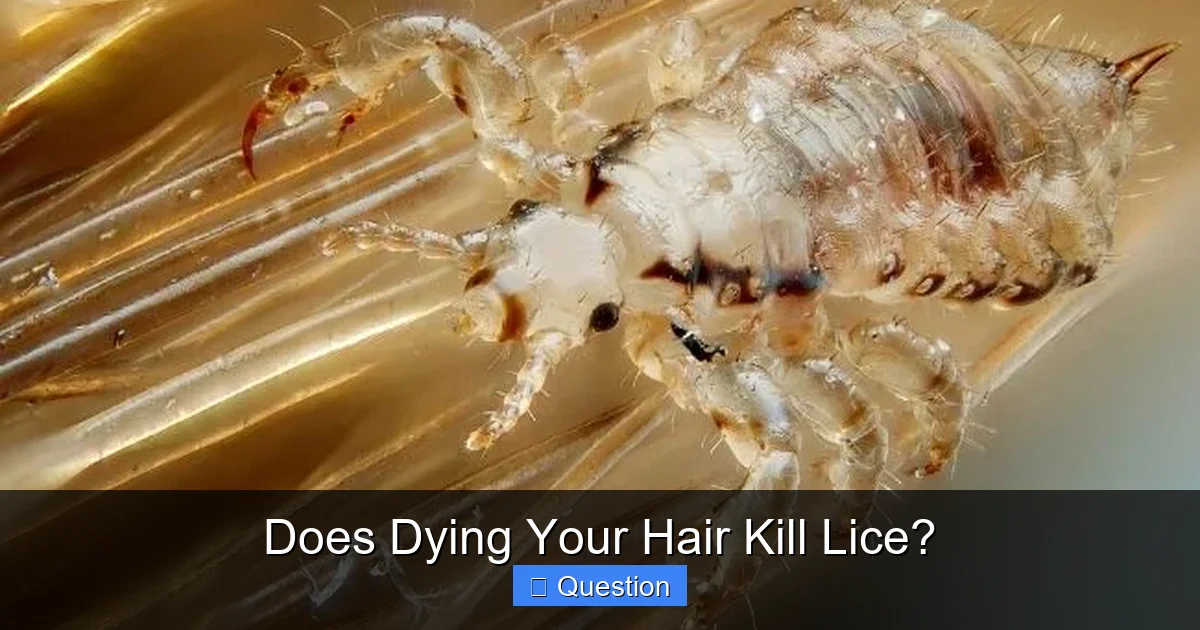
Many people wonder, “Does dying your hair kill lice?” While the harsh chemicals in hair dye might temporarily stun or kill some adult lice, it’s not a reliable or effective solution for a full infestation. Hair dye typically fails to kill lice eggs (nits) and doesn’t reach all lice hiding on the scalp, leading to re-infestation.
There are few things that can send a shiver down your spine quite like the discovery of head lice. These tiny, persistent parasites are a common nuisance, especially among school-aged children, and they can leave even the calmest parent feeling a bit frantic. When faced with an infestation, it’s natural to grasp at any potential solution, hoping for a quick and easy fix.
One common question that often pops up in these moments of desperation is, “Does dying your hair kill lice?” It’s a tempting thought, isn’t it? The idea that a simple hair coloring session could not only give you a fresh new look but also banish those unwelcome guests seems almost too good to be true. And often, when something sounds too good to be true, it is. Let’s dive into the science and separate fact from fiction when it comes to hair dye and head lice.
Key Takeaways
- Limited Efficacy Against Adult Lice: Hair dye chemicals might kill some adult lice on contact due to their toxicity, but this effect is often incomplete and inconsistent, making it an unreliable treatment.
- Ineffective Against Nits (Lice Eggs): The protective shell of nits, combined with their close proximity to the scalp where dye might not fully penetrate, means most lice eggs survive the dyeing process, leading to re-infestation.
- Incomplete Coverage: Lice often hide close to the scalp or in areas that hair dye may not fully saturate, allowing many to escape the chemical exposure.
- Risk of Chemical Irritation: Repeated or improper use of hair dye can cause scalp irritation, allergic reactions, and damage to hair, adding unnecessary risks when there are more effective treatments available.
- False Sense of Security: Relying on hair dye can provide a false sense of security, delaying proper treatment and allowing the infestation to spread or worsen.
- Proven Methods are Essential: Effective lice eradication requires a multi-step approach including approved over-the-counter or prescription medicated treatments, thorough manual removal (wet combing), and environmental clean-up.
📑 Table of Contents
- The Allure of a Quick Fix: Why Hair Dye Seems Like a Solution
- Unpacking the Science: How Hair Dye Interacts with Lice
- The Hair Dye Drawbacks: More Than Just a Temporary Color Change
- What *Actually* Works: Proven Methods for Lice Eradication
- Beyond Treatment: Preventing Future Lice Infestations
- Conclusion
The Allure of a Quick Fix: Why Hair Dye Seems Like a Solution
The thought that hair dye might be a secret weapon against lice isn’t entirely baseless. After all, hair dyes are packed with strong chemicals designed to penetrate hair shafts and alter their color. It stands to reason that such powerful substances might be hostile to tiny insects living on the scalp. People often observe some immediate effects, which can fuel the misconception that dying your hair kills lice effectively.
The Chemical Cocktail in Hair Dye
Most permanent hair dyes contain a combination of harsh chemicals, including ammonia, hydrogen peroxide, and various colorants. Ammonia helps open the hair cuticle, while hydrogen peroxide acts as an oxidizing agent, stripping natural color and allowing the new color to deposit. These chemicals are certainly potent, and in concentrated forms, they can be toxic to living organisms.
Initial Observations vs. Reality
When dye is applied to hair, some adult lice may indeed be affected. The strong fumes and direct contact with chemicals like hydrogen peroxide or PPD (p-phenylenediamine, a common dye ingredient) can stun, injure, or even kill some adult lice. This immediate, visible effect can lead individuals to believe that dying your hair kills lice completely. However, this initial observation often paints an incomplete picture of the overall eradication process.
Unpacking the Science: How Hair Dye Interacts with Lice
While some adult lice might succumb to hair dye, the full story of whether dying your hair kills lice is more complex. The efficacy, or lack thereof, really depends on the different life stages of the lice and the mechanics of dye application.

Visual guide about Does Dying Your Hair Kill Lice?
Image source: myliceadvice.com
Impact on Adult Lice and Nymphs
Adult lice and nymphs (immature lice) are vulnerable creatures, and they breathe through tiny pores called spiracles. Harsh chemicals or thick substances can theoretically block these pores, leading to suffocation. Additionally, some chemicals in hair dye might act as neurotoxins, disrupting the nervous system of the lice. So, yes, some adult lice and nymphs that come into direct, prolonged contact with the dye might be killed or incapacitated. However, lice are quite mobile and often seek refuge away from the direct application of dye, especially in crevices and areas of the scalp that might not be thoroughly saturated.
The Resilience of Nits (Lice Eggs)
This is where the idea that dying your hair kills lice truly falls short. Lice eggs, known as nits, are incredibly resilient. They are tiny, oval-shaped, and firmly glued to the hair shaft, typically very close to the scalp (within ¼ inch). Nits have a hard, protective outer shell that makes them very difficult to penetrate. This shell acts as a barrier, safeguarding the developing louse embryo inside from external threats, including many chemical treatments and, crucially, hair dye.
Hydrogen peroxide and other dye chemicals primarily work on the hair shaft itself, not necessarily on the surface of the nit. Even if some dye seeps onto the nit, it’s unlikely to penetrate its tough casing to kill the embryo. Because nits are laid so close to the scalp, they are often insulated by the scalp’s natural warmth and also frequently escape thorough dye coverage. If even a few viable nits survive the dyeing process, they will hatch within 7-10 days, leading to a renewed infestation. This is the primary reason why dying your hair kills lice is an unreliable solution.
Scalp Protection and Incomplete Coverage
Hair dye instructions typically advise against scrubbing the dye into the scalp, and many people apply conditioner or petroleum jelly to the hairline to prevent skin staining. This means that the areas closest to the scalp, where lice and nits are most concentrated, might not receive full chemical exposure. Lice are also masters of hiding. They can be found behind the ears, at the nape of the neck, and even in eyebrows or eyelashes (though less common), areas that are often missed during a standard hair dye application. This incomplete coverage further limits the effectiveness of hair dye as a lice treatment.
The Hair Dye Drawbacks: More Than Just a Temporary Color Change
Beyond its ineffectiveness against nits and the overall infestation, trying to use hair dye as a lice treatment comes with its own set of significant drawbacks and risks.
Health Risks of Over-Dyeing
Hair dye is designed for occasional use, not as a frequent medical treatment. Applying harsh chemicals to an already irritated scalp (which can happen with lice scratching) can lead to allergic reactions, severe skin irritation, burns, or even infections. Repeated exposure to strong chemicals can also damage your hair, making it brittle, dry, and prone to breakage. Relying on hair dye instead of proper treatment is not only ineffective but potentially harmful.
False Sense of Security
Perhaps one of the most dangerous aspects of trying to treat lice with hair dye is the false sense of security it provides. If you believe that dying your hair kills lice, you might delay seeking out truly effective treatments. This delay allows the surviving nits to hatch and the infestation to continue, potentially spreading to others in your household, school, or workplace. The longer an infestation persists, the more challenging it can become to eradicate.
The Cycle Continues: Re-infestation
As we’ve discussed, the core issue is the survival of nits. If the nits hatch, new lice emerge, and the cycle of feeding, mating, and laying more eggs begins all over again. You’ll find yourself back at square one, but perhaps with a damaged scalp and hair, and still dealing with lice. This is a clear indicator that the myth of dying your hair kills lice is just that—a myth.
What *Actually* Works: Proven Methods for Lice Eradication
Instead of relying on unproven methods like hair dye, it’s crucial to use strategies that are scientifically proven to work. Effective lice treatment involves a combination of medicated products and meticulous manual removal.
Over-the-Counter (OTC) Treatments
The most common and accessible treatments are OTC products containing insecticides like pyrethrins or permethrin (e.g., Nix, Rid). These work by paralyzing and killing lice. Another popular and increasingly common option is dimethicone, a silicone-based product that suffocates lice by coating them. It’s important to follow the package directions precisely, which usually involve applying the product to dry hair, leaving it on for a specified time, and then rinsing. A second application is often recommended 7-10 days later to kill any newly hatched nymphs that survived the first treatment as nits.
Prescription Treatments
For persistent or resistant infestations, a doctor may prescribe stronger medications. These can include lotions or shampoos containing malathion, spinosad, or ivermectin. These products are often very effective but should only be used under medical supervision due to their potency.
Manual Removal: The Critical Role of Wet Combing
Regardless of the chemical treatment used, manual removal of lice and nits is absolutely essential for complete eradication. This involves wet combing with a fine-toothed nit comb. Here’s how:
- Wet Hair: Apply a generous amount of regular conditioner to wet hair. This helps to stun lice and makes the comb glide more easily.
- Section Hair: Divide the hair into small, manageable sections.
- Comb Thoroughly: Starting from the scalp, comb down to the end of the hair shaft. After each stroke, wipe the comb on a paper towel to remove any lice or nits, and inspect it.
- Repeat: Continue combing each section at least twice. This process should be done every 2-3 days for at least two weeks after the last live louse is seen.
Manual removal is painstaking, but it’s the most reliable way to ensure all nits are gone, breaking the life cycle and preventing re-infestation. This step is often overlooked when people mistakenly believe dying your hair kills lice.
Environmental Clean-up
While head lice primarily live on human heads, a quick clean-up of the immediate environment can provide peace of mind and minimize the minimal risk of re-infestation from stray lice. This includes:
- Washing: Wash all bedding, clothing, and stuffed animals used by the infested person in hot water (at least 130°F/54°C) and dry on high heat.
- Sealing: Items that cannot be washed can be sealed in plastic bags for two weeks. Lice cannot survive without a human host for more than 1-2 days.
- Vacuuming: Vacuum carpets, rugs, and upholstered furniture, especially where the infested person spent a lot of time.
- Soaking: Soak combs and brushes in hot water (130°F/54°C) for 5-10 minutes.
Beyond Treatment: Preventing Future Lice Infestations
Once you’ve successfully eradicated an infestation, prevention becomes key to avoiding a repeat performance. While you can’t prevent every possible exposure, there are steps you can take to reduce the risk.
Regular Head Checks
Especially if you have school-aged children, regular weekly head checks are invaluable. Look for nits near the scalp, particularly behind the ears and at the nape of the neck. Early detection can prevent a full-blown infestation.
Avoid Sharing Personal Items
Lice are primarily spread through head-to-head contact, but sharing items like hats, scarves, hairbrushes, combs, hair ties, and headphones can also facilitate transmission. Encourage children and family members to keep their personal items separate.
Hair Styling for Prevention
For children with long hair, tying it back in a braid, ponytail, or bun can help reduce the chances of head-to-head contact with an infested person, thereby minimizing the risk of lice transfer. This creates a physical barrier that makes it harder for lice to crawl from one head to another.
Education and Communication
Talk to your children about lice and how to prevent them. If there’s an outbreak at school or daycare, communicate with other parents and the school staff. Awareness and collective action can significantly curb the spread.
Conclusion
So, does dying your hair kill lice? The definitive answer is no, not effectively or reliably. While the chemicals might harm some adult lice, they are largely ineffective against the resilient nits, which are the key to breaking the lice life cycle. Relying on hair dye is a misconception that can lead to prolonged infestation, frustration, and potential damage to your scalp and hair.
Instead of reaching for the hair dye box, arm yourself with knowledge about proven lice treatments. A combination of medicated products and diligent wet combing is the gold standard for successful eradication. Remember, prevention and early detection are your best allies in the ongoing battle against head lice. By understanding what works and what doesn’t, you can tackle any infestation with confidence and achieve a truly lice-free head.
Frequently Asked Questions
Does hair dye kill all lice?
No, hair dye does not reliably kill all lice. While the harsh chemicals might kill some adult lice, they are generally ineffective against lice eggs (nits), which are protected by a strong shell and often escape direct chemical exposure.
Why isn’t hair dye effective against lice eggs (nits)?
Nits have a tough, protective outer casing that shields the developing louse embryo from most chemicals, including those in hair dye. They are also glued firmly to the hair shaft close to the scalp, making them difficult to reach thoroughly with dye.
Can using hair dye worsen a lice infestation?
While hair dye itself won’t worsen the infestation directly, relying on it as a treatment can give a false sense of security, delaying proper treatment. This allows surviving nits to hatch and the infestation to continue or spread, effectively prolonging the problem.
Are there any health risks associated with using hair dye for lice?
Yes, repeatedly applying harsh chemicals from hair dye to an already irritated scalp can cause allergic reactions, burns, irritation, or hair damage. These risks are unnecessary, especially since hair dye is not an effective lice treatment.
What are the most effective treatments for head lice?
The most effective treatments involve using approved over-the-counter medicated shampoos or lotions (like permethrin or dimethicone) or prescription treatments, combined with thorough manual removal of lice and nits using a fine-toothed comb.
How can I prevent future lice infestations?
Prevention includes regular head checks, avoiding the sharing of personal items like hats and brushes, tying back long hair, and educating children about how lice spread. Early detection is key to stopping infestations from becoming severe.