
Does Waxing Reduce Hair Growth?
Many wonder, “Does waxing reduce hair growth?” While waxing doesn’t permanently stop hair growth, consistent removal from the root can lead to noticeable changes over time. You might find hair growing back thinner, finer, and sparser, and the regrowth cycle can become slower, making your smooth skin last longer between sessions. This isn’t a permanent reduction like laser, but a significant improvement in managing unwanted hair.
Have you ever wondered if the discomfort of waxing is truly worth it in the long run? Perhaps you’ve heard whispers that consistent waxing might lead to less hair, or hair that’s finer and easier to manage. It’s a question many of us ponder while enduring that quick rip: “Does waxing reduce hair growth?” This isn’t just a casual query; it’s a hope that our efforts today will lead to a smoother, less hairy tomorrow.
The quest for smooth, hair-free skin has led countless individuals to embrace waxing as a preferred method of hair removal. Unlike shaving, which merely cuts hair at the surface, waxing promises to pull hair from its root, offering a longer period of smoothness. But beyond the immediate results, there’s a deeper curiosity: can this consistent removal method actually alter our hair growth patterns? Can it truly make hair grow back thinner, sparser, or even eventually disappear? Let’s dive deep into the science and personal experiences to uncover the real truth behind waxing and its long-term effects on hair growth.
Key Takeaways
- Not Permanent Hair Removal: Waxing pulls hair from the root, but it does not permanently destroy the hair follicle. Hair will eventually regrow.
- Thinner, Finer Regrowth: With consistent waxing over time, many individuals experience hair growing back noticeably thinner, finer, and lighter in color, making it less noticeable.
- Slower Regrowth Cycle: Regular waxing can synchronize the hair growth cycle, leading to longer periods of smooth skin between sessions as hairs grow back at a similar pace.
- Reduced Hair Density: Over many years, some hair follicles may become damaged or weakened, potentially leading to a slight reduction in the overall density of hair in the waxed area.
- Individual Results Vary: The extent to which waxing reduces hair growth varies significantly based on genetics, hormones, hair type, and the consistency of waxing.
- Requires Consistency: To see noticeable changes in hair texture and regrowth speed, consistent waxing every 3-6 weeks over an extended period is crucial.
- Not Comparable to Laser/Electrolysis: While it offers benefits, waxing does not provide the same level of long-term hair reduction or permanent removal as professional laser hair removal or electrolysis.
📑 Table of Contents
- Understanding How Waxing Works on Your Hair
- Does Waxing Truly Reduce Hair Growth? The Science and Experience
- Factors Influencing Hair Regrowth After Waxing
- Maximizing the Benefits: Tips for Effective Waxing and Slower Regrowth
- Waxing vs. Other Hair Removal Methods: A Comparison
- Conclusion: The Nuance of Waxing and Hair Growth
Understanding How Waxing Works on Your Hair
Before we can fully answer the question, “Does waxing reduce hair growth?”, it’s essential to understand the mechanics of waxing and, more importantly, the biology of hair itself. When you get waxed, a warm wax substance is applied to your skin and then quickly removed, taking the hair with it. The key here is that the hair is pulled directly from the follicle, rather than just cut at the skin’s surface. This is what differentiates it from shaving.
The Hair Growth Cycle: A Quick Refresher
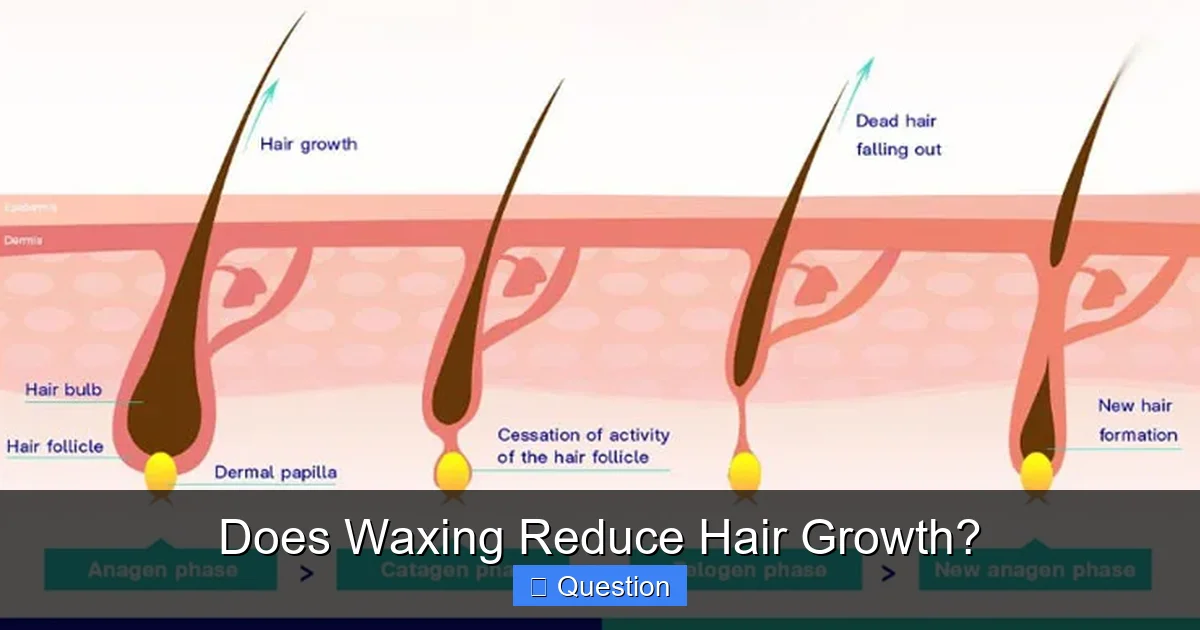
Our hair doesn’t just grow all at once; it follows a natural cycle. Knowing this cycle helps us understand why waxing has the effects it does. There are three main phases:
- Anagen (Growing Phase): This is the active growth stage. Hair follicles are producing new hair cells, and the hair shaft is actively pushing out. This phase can last anywhere from 2 to 7 years, depending on the body part and individual genetics. When you wax, you ideally want to pull hair out during this phase, as it’s directly connected to the blood supply, and its removal is more impactful.
- Catagen (Transition Phase): This is a short transitional stage where hair growth stops. The hair follicle shrinks, and the hair detaches from the blood supply at the base of the follicle. It lasts about 2-3 weeks.
- Telogen (Resting Phase): In this phase, the hair is completely at rest, and a new hair begins to form in the follicle below. The old hair is eventually shed, often when a new anagen hair starts to emerge. This phase lasts around 3 months.
When hair is pulled out during the anagen phase, the follicle is disrupted at its most active state. This disruption is what contributes to the potential changes in hair growth over time.
Does Waxing Truly Reduce Hair Growth? The Science and Experience

Visual guide about Does Waxing Reduce Hair Growth?
Image source: theglossylocks.com
So, “Does waxing reduce hair growth?” The straightforward answer is: it doesn’t permanently stop hair growth, but it can significantly alter it over time. It’s crucial to distinguish between reduction and permanent removal. Waxing is not a permanent hair removal method like electrolysis or certain types of laser treatment. However, consistent waxing often leads to very noticeable changes that give the *appearance* of reduced growth.
Thinner, Finer, and Lighter Hair
One of the most commonly reported benefits of consistent waxing is that hair tends to grow back thinner, finer, and often lighter in color. Why does this happen? When hair is repeatedly pulled from the root, especially during its anagen phase, it can cause a subtle trauma to the follicle. Over time, this repeated trauma can weaken the follicle’s ability to produce robust, thick hair.
Think of it like repeatedly plucking a plant. While it might grow back, its subsequent growth might be less vigorous. Similarly, weakened hair follicles may produce a hair shaft with a smaller diameter, making it feel softer and look less prominent. For many, this alone feels like a reduction in hair growth.
Slower Regrowth and Sparser Patches
Another significant change people experience is a slower rate of regrowth. When you wax consistently, you’re catching hairs at various stages of their growth cycle. Over time, you can essentially ‘synchronize’ the growth cycle of the hairs in the waxed area. This means more hairs are removed during their active growth phase. As a result, the time it takes for hair to reappear can lengthen, giving you longer periods of smooth skin.
Additionally, some individuals report sparser patches or even areas where hair simply stops growing. While complete cessation of growth is rare and typically not guaranteed by waxing, the repeated trauma to follicles can, in some cases, lead to damage severe enough that a follicle produces little to no hair, or it becomes dormant for extended periods. This contributes to the perception that waxing does reduce hair growth.
Factors Influencing Hair Regrowth After Waxing
The degree to which “does waxing reduce hair growth” holds true can vary greatly from person to person. Several factors play a significant role in determining your individual results:
Genetics and Hormones
Your genetic makeup and hormonal balance are huge determinants of your hair growth patterns. Some people are naturally predisposed to having thicker, more abundant hair, and for them, even consistent waxing might only lead to minor changes. Hormonal fluctuations (due to puberty, pregnancy, menopause, or conditions like PCOS) can also impact hair growth, sometimes overriding the effects of waxing.
Consistency is Key
Sporadic waxing won’t give you the long-term benefits. To potentially see hair reduction, you need to commit to a regular waxing schedule, typically every 3-6 weeks. This consistency is vital for repeatedly disrupting the hair’s growth cycle and weakening the follicles over time. Missing sessions allows hairs to complete their full growth cycle undisturbed, which can negate previous progress.
Hair Type and Thickness
Individuals with finer hair might see noticeable changes faster than those with very coarse, thick hair. Coarse hair tends to have a more resilient follicle, making it harder to weaken through waxing. However, even coarse hair can become softer and finer with dedicated, consistent waxing.
Proper Waxing Technique
The way waxing is done also plays a role. If hair breaks instead of being pulled from the root, you won’t get the desired effect on the follicle. A skilled esthetician ensures proper technique, which includes applying wax correctly and removing it swiftly in the right direction, minimizing breakage and maximizing root removal.
Maximizing the Benefits: Tips for Effective Waxing and Slower Regrowth
If your goal is to reduce hair growth over time through waxing, here are some practical tips to help you achieve the best possible results:
Commit to a Regular Schedule
This is perhaps the most crucial tip. Aim for waxing every 3 to 6 weeks. This consistent timing helps catch hair in the anagen phase, maximizing the impact on the follicle and promoting synchronized regrowth. Discuss with your esthetician the ideal schedule for your specific hair type and growth rate.
Prepare Your Skin Properly
- Exfoliate: Gently exfoliate the area 24-48 hours before your waxing appointment. This helps remove dead skin cells and lifts hairs, making them easier to grip and reducing the risk of ingrown hairs.
- Cleanse: Ensure your skin is clean and free of oils, lotions, or deodorants before waxing. This allows the wax to adhere better to the hair.
- Hair Length: For best results, your hair should be about ¼ to ½ inch long (around the length of a grain of rice). Too short, and the wax can’t grip; too long, and it can be more painful and less effective.
Excellent Aftercare is Essential
- Soothe the Skin: Immediately after waxing, use soothing products like aloe vera gel, witch hazel, or a specialized post-wax lotion to calm redness and reduce inflammation.
- Avoid Irritants: For 24-48 hours, avoid hot showers, saunas, swimming pools, tight clothing, and direct sun exposure. These can irritate freshly waxed skin and lead to breakouts or ingrown hairs.
- Prevent Ingrown Hairs: Continue to gently exfoliate 2-3 times a week (starting a few days after waxing, once initial redness subsides) and moisturize daily. Products containing salicylic acid or glycolic acid can be very effective in preventing ingrown hairs.
Hydrate and Moisturize Regularly
Healthy, hydrated skin supports healthy follicles. Daily moisturizing keeps the skin supple, which can help new hair grow out without getting trapped, further reducing the chances of ingrown hairs and supporting the overall health of the waxed area.
Waxing vs. Other Hair Removal Methods: A Comparison
Understanding “Does waxing reduce hair growth?” also involves seeing it in context with other methods.
Shaving
Shaving cuts hair at the skin’s surface. It has no impact on the hair follicle itself. Hair appears quickly because it was never removed from the root, and it often feels coarser because it’s cut bluntly. There is no hair reduction benefit from shaving.
Epilating
Epilators use rotating tweezers to pull multiple hairs from the root simultaneously, similar to waxing. Consistent epilating can offer similar benefits to waxing in terms of potentially leading to thinner, finer regrowth over time.
Depilatory Creams
These creams use chemicals to dissolve hair just below the skin’s surface. They don’t pull hair from the root, so while they last longer than shaving, they don’t impact the hair follicle’s ability to grow hair back thicker or thinner.
Laser Hair Removal and IPL (Intense Pulsed Light)
These professional treatments are designed for long-term hair reduction. They use light energy to target the melanin in the hair follicle, damaging it and inhibiting future growth. Laser and IPL treatments *do* offer significant, permanent hair reduction, often by 70-90% after a series of sessions. This is a crucial distinction when asking, “Does waxing reduce hair growth?” Waxing offers alteration, laser offers reduction/inhibition.
Electrolysis
Electrolysis is the only FDA-approved method for permanent hair removal. It uses a fine probe to deliver a small electrical current directly into each individual hair follicle, destroying its ability to produce hair. It’s effective for all hair colors and skin types but is a tedious process.
Conclusion: The Nuance of Waxing and Hair Growth
So, does waxing reduce hair growth? The consensus, supported by both anecdotal evidence and dermatological understanding, is a nuanced yes. While waxing will not permanently eradicate hair from your body, consistent and proper waxing can lead to a noticeable reduction in the thickness, coarseness, and density of your hair over time. You can expect hair to grow back thinner, softer, and often lighter in color, making it less visible and easier to manage. Furthermore, your regrowth cycle can slow down, extending the period of smooth skin between appointments.
However, it’s vital to set realistic expectations. Waxing is a method of hair management, not permanent removal. Its effectiveness in altering hair growth relies heavily on consistency, proper technique, and individual biological factors. If your goal is permanent hair removal, professional treatments like laser hair removal or electrolysis would be more suitable. But if you’re looking for a semi-permanent solution that offers cumulative benefits of softer, sparser, and slower-growing hair, then waxing is indeed a worthwhile choice in your journey to smoother skin. Embrace the process, stay consistent, and enjoy the evolving benefits!
Frequently Asked Questions
Does waxing permanently stop hair growth?
No, waxing does not permanently stop hair growth. It removes hair from the root, but the hair follicle remains intact and will eventually produce new hair. For permanent hair removal, treatments like electrolysis are necessary.
How long does it take to see hair reduction from waxing?
Most individuals start noticing changes like finer, softer hair and slower regrowth after 3-6 consistent waxing sessions, typically over 3-6 months. Significant reduction in density may take a year or more of regular waxing.
Can waxing damage hair follicles permanently?
While consistent waxing can weaken hair follicles over time, leading to thinner hair, it’s rare for waxing to cause permanent, widespread damage that completely stops growth. Severe damage would typically result from improper technique leading to trauma or infection.
Will my hair grow back thicker if I stop waxing?
No, waxing does not cause hair to grow back thicker. If you stop waxing, your hair will eventually revert to its natural growth cycle and texture, as determined by your genetics, and will likely appear as it did before you started waxing.
Is waxing better than shaving for reducing hair growth?
Yes, waxing is generally considered better than shaving for influencing hair growth. Shaving only cuts hair at the surface, while waxing pulls hair from the root, potentially leading to thinner, finer, and slower regrowth over time.
Can everyone achieve reduced hair growth from waxing?
The extent of hair reduction from waxing varies greatly. While many people experience positive changes, factors like genetics, hormones, hair type, and consistency of waxing all play a role. Those with very coarse or hormonally-driven hair growth might see less dramatic results.