
How Much Are Hair Extensions?

Considering hair extensions? The cost of hair extensions varies significantly based on type, hair quality, length, stylist expertise, and location. While clip-ins can be affordable for DIY, professional methods like sew-ins or fusion can range from hundreds to thousands of dollars, including installation and maintenance. Understanding these factors is key to budgeting for your perfect hair transformation.
Dreaming of longer, fuller, more voluminous hair? Hair extensions can be a fantastic way to achieve that look, transforming your style in an instant. From adding a touch of drama for a special occasion to completely overhauling your everyday appearance, extensions offer incredible versatility. But before you dive into the world of luscious locks, one of the biggest questions on everyone’s mind is:
“How much are hair extensions?”
It’s a question with no single, simple answer, and for good reason! The cost of hair extensions is a complex puzzle with many pieces. Think of it like buying a car; a compact sedan will have a vastly different price tag than a luxury SUV, even though both get you from point A to point B. Similarly, hair extensions come in a huge range of types, qualities, and installation methods, each with its own price point. Understanding these factors is the first step in figuring out how much you can expect to spend to achieve your dream hair.
Key Takeaways
- Cost Varies Wildly: The price of hair extensions isn’t a single number; it can range from under $100 for DIY clip-ins to over $3,000 for high-quality, professionally installed permanent methods.
- Type and Quality are Key Drivers: Human Remy hair is more expensive but lasts longer and looks more natural than synthetic or non-Remy hair. Different installation methods (tape-in, sew-in, fusion, micro-link) also have distinct price points.
- Professional Installation Adds Significant Cost: While you can buy extensions online, having them professionally installed by an experienced stylist significantly increases the overall price but ensures a flawless, long-lasting look.
- Beyond the Initial Purchase: Don’t forget recurring costs like re-installations, maintenance appointments, specialized hair products, and eventual removal fees, which can add up over time.
- Location and Stylist Expertise Matter: Salons in major metropolitan areas or those with highly sought-after extension specialists will charge more than smaller salons or less experienced stylists.
- DIY Options Are Most Affordable: If you’re on a tight budget, clip-in or halo extensions are the most cost-effective because you avoid installation fees and can apply them yourself.
- Longevity vs. Investment: More expensive, professionally installed extensions often last longer and require less daily effort, making the higher upfront cost a worthwhile investment for some.
📑 Table of Contents
- Understanding the Core Factors Influencing Hair Extension Costs
- A Deep Dive into Popular Hair Extension Types and Their Costs
- Beyond the Initial Purchase: Hidden Costs to Consider
- DIY vs. Professional: Where Does Your Money Go?
- Tips for Budgeting and Saving on Hair Extensions
- Is the Investment Worth It? Making Your Decision.
- Conclusion
Understanding the Core Factors Influencing Hair Extension Costs
When you start researching hair extensions, you’ll quickly notice that prices vary wildly. This isn’t just random; it’s due to several key factors that directly impact the final cost. Let’s break down what truly influences how much are hair extensions.
Hair Type and Quality: Human vs. Synthetic
- Synthetic Hair: This is the most affordable option. Synthetic extensions are made from various types of plastic fibers. They’re great for temporary use or if you want to experiment with a new style without a big commitment. However, synthetic hair can’t be heat-styled (unless specified as heat-friendly synthetic), doesn’t last as long, can tangle easily, and doesn’t blend as seamlessly with natural hair. Prices typically range from $50 to $200 for a full set.
- Human Hair: This is where the real investment begins. Human hair extensions look and feel the most natural because, well, they are natural hair! You can wash, style, and heat-treat them just like your own hair. Within human hair, there are further distinctions:
- Non-Remy Human Hair: Cuticle layers run in different directions, leading to more tangling. It’s processed to strip cuticles, making it less durable but still more natural than synthetic. Cheaper than Remy.
- Remy Human Hair: This is the gold standard. The hair cuticles are kept intact and aligned in the same direction, mimicking natural hair growth. This minimizes tangling, keeps the hair smooth and shiny, and allows it to last much longer. Remy hair is significantly more expensive but offers superior quality and longevity.
- Virgin Remy Hair: This is Remy hair that has never been chemically processed (dyed, permed, bleached). It’s the purest and most expensive form.
For human hair, you’re looking at a range of $100 to $1,000+ just for the hair itself, depending on quality, length, and brand.
Extension Method
The way the hair is attached to your head is a major factor in how much are hair extensions. Each method has different labor requirements, material costs, and maintenance schedules.
- Temporary (e.g., Clip-ins, Halos): You install these yourself, saving on salon fees. They’re the most budget-friendly.
- Semi-Permanent (e.g., Tape-ins, Micro-links): These require professional installation and maintenance but offer more longevity than temporary options.
- Permanent (e.g., Sew-ins, Fusion/Keratin Bonds): These are the most labor-intensive and long-lasting, requiring significant professional expertise for installation and removal.
Length and Volume
It’s simple: longer hair means more hair, and more hair means a higher price tag. The same goes for volume. If you just want to add a little thickness, it’ll cost less than if you’re aiming for dramatic Rapunzel-length hair.
Stylist Expertise and Salon Location
Just like any skilled service, an experienced and highly sought-after extension specialist will charge more for their time and expertise. Salons in big cities or upscale neighborhoods often have higher overheads, which translates to higher prices for clients. A specialist in a top salon in New York City or Los Angeles will charge significantly more than a stylist in a smaller town.
A Deep Dive into Popular Hair Extension Types and Their Costs
Let’s get down to the specifics. Here’s a breakdown of common hair extension types and what you can expect in terms of how much are hair extensions for each.
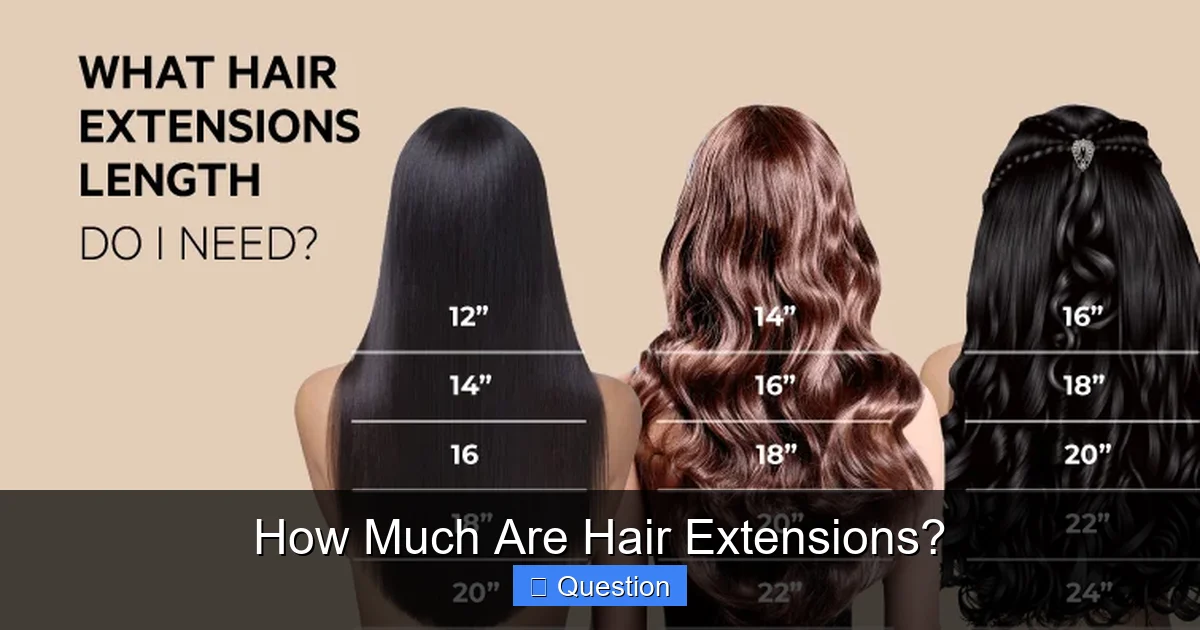
Visual guide about How Much Are Hair Extensions?
Image source: hairextensionsofhouston.com
Clip-in Hair Extensions
What they are: Sections of hair attached to small clips that you can easily attach and remove yourself.
Best for: Temporary volume, length, or highlights. Great for special occasions or trying out a look.
How much are hair extensions (hair only):
- Synthetic: $50 – $150
- Human Remy: $100 – $400
Installation Cost: $0 (DIY)
Maintenance: Wash as needed, store properly. No salon visits.
Longevity: Years with proper care, as they’re not worn daily.
Pros: Most affordable, no damage, easy to change looks.
Cons: Not for daily, permanent wear; must be applied and removed daily.
Tape-in Hair Extensions
What they are: Small wefts of hair with a medical-grade adhesive tape at the top. Two wefts are “sandwiched” around a small section of your natural hair.
Best for: Semi-permanent length and volume that lies flat and is very discreet.
How much are hair extensions (hair only):
- Human Remy: $200 – $800+ (depending on length and quantity)
Installation Cost: $150 – $400 (professional required)
Maintenance: Re-taping and re-installation every 6-8 weeks ($100 – $300 per session).
Longevity: Hair can be reused 2-3 times, lasting 6 months to a year or more.
Pros: Fast installation, natural look, comfortable, reusable.
Cons: Requires professional maintenance, can be tricky with oily hair products, limits certain hairstyles.
Sew-in Weft (Weave) Hair Extensions
What they are: Sections of hair (wefts) are sewn onto tight cornrow braids made from your natural hair.
Best for: Adding significant length and volume, particularly popular for thick or textured hair. Offers a protective style.
How much are hair extensions (hair only):
- Human Remy: $150 – $600+ (depending on length and quantity of wefts)
Installation Cost: $200 – $800 (highly skilled professional required, varies by number of rows)
Maintenance: Tightening/re-sewing every 6-8 weeks ($100 – $300).
Longevity: Hair can be reused for up to a year or more with proper care; braids last 6-10 weeks before needing to be redone.
Pros: Very secure, no heat or glue, hair fully protected underneath, long-lasting wear.
Cons: Can feel heavy or tight initially, can limit access to the scalp, not ideal for very fine hair.
Fusion/Keratin Bond Hair Extensions
What they are: Small strands of hair with a keratin bond (a protein similar to natural hair) at the tip. These are fused to small sections of your natural hair using heat or ultrasonic tools.
Best for: The most discreet and natural-looking permanent extensions. Ideal for those who want completely seamless integration.
How much are hair extensions (hair only):
- Human Remy: $300 – $1,500+ (high-quality hair is a must)
Installation Cost: $300 – $1,500+ (very labor-intensive, professional specialist essential)
Maintenance: No re-installation, but adjustments might be needed. New hair every 3-5 months.
Longevity: Lasts 3-5 months before new application is needed. Hair is generally not reusable.
Pros: Very natural look and feel, excellent for styling, long wear time.
Cons: High initial cost, can be damaging if not installed/removed correctly, not reusable, long installation time.
Micro-link/I-Tip Hair Extensions
What they are: Small strands of hair with a keratin tip (I-tip) that is threaded through a micro-ring or bead, then clamped onto a small section of natural hair. No heat or glue.
Best for: A long-lasting option without heat or adhesive, allowing full access to the scalp.
How much are hair extensions (hair only):
- Human Remy: $250 – $1,000+
Installation Cost: $200 – $800 (professional required)
Maintenance: Move-ups (tightening) every 6-8 weeks ($100 – $300). Hair can be reused.
Longevity: Hair can be reused for 6 months to a year or more.
Pros: No heat or glue, reusable hair, easy to remove and adjust.
Cons: Beads can be visible or uncomfortable for some, can cause tension if not installed correctly, not ideal for very fine hair.
Halo Hair Extensions
What they are: A weft of hair attached to an invisible wire that sits on top of your head, disguised by your own hair. No clips, glue, or bonds to your natural hair.
Best for: Instant, temporary volume and length with absolutely no damage. Similar to clip-ins in application but uses a different mechanism.
How much are hair extensions (hair only):
- Human Remy: $150 – $500
Installation Cost: $0 (DIY)
Maintenance: Wash as needed, store properly. No salon visits.
Longevity: Years with proper care, as they’re not worn daily.
Pros: Zero damage, incredibly easy and fast to apply/remove, comfortable.
Cons: Not for permanent wear, may not be suitable for very short or layered hair.
Beyond the Initial Purchase: Hidden Costs to Consider
When asking “how much are hair extensions?”, it’s crucial to look beyond the initial price tag of the hair itself. There are several additional costs that can significantly increase your overall investment.
Installation Fees
This is often the biggest “hidden” cost. For any professional method (tape-ins, sew-ins, fusion, micro-links), you’re paying for the stylist’s time, skill, and expertise. These fees can often be as much as, or even more than, the cost of the hair extensions themselves. Always get a clear quote that includes both hair and installation.
Maintenance and Re-installations
Most semi-permanent and permanent extensions aren’t a “set it and forget it” deal. As your natural hair grows, the extensions move down, requiring maintenance. This means regular appointments for “move-ups,” “tightenings,” or complete re-installations. These recurring costs can add up over the months you wear extensions.
- Tape-ins/Micro-links: Require move-ups every 6-8 weeks.
- Sew-ins: Require re-braiding and re-sewing every 6-10 weeks.
- Fusion: Generally replaced entirely every 3-5 months.
Specialized Products
To keep your extensions looking their best and to prolong their lifespan, you’ll need to invest in specific hair care products. This often includes sulfate-free shampoos and conditioners, leave-in conditioners, heat protectants, and specialized brushes. These are essential for preventing tangling, dryness, and premature shedding, and they can add an extra $50-$150 to your initial setup.
Removal Costs
Don’t forget that extensions need to come out eventually! Professional removal is highly recommended for methods like tape-ins, fusion, and micro-links to prevent damage to your natural hair. Removal fees typically range from $100 to $300, depending on the method and the time required.
DIY vs. Professional: Where Does Your Money Go?
The choice between doing it yourself and going to a professional significantly impacts how much are hair extensions. DIY options like clip-ins and halos are by far the most budget-friendly because you eliminate all salon labor costs. You simply buy the hair and apply it yourself.
However, for methods like tape-ins, sew-ins, fusion, or micro-links, professional installation is almost always a necessity. Attempting these yourself without proper training can lead to damage to your natural hair, an unnatural look, or a very short lifespan for your expensive extensions. While the professional route is a higher upfront investment, it typically ensures a flawless blend, correct application to minimize damage, and expert advice on maintenance.
Tips for Budgeting and Saving on Hair Extensions
Even with all these factors, you can still be smart about how much are hair extensions for you.
- Start with Clip-ins or Halos: If you’re new to extensions or on a tight budget, these are excellent, low-commitment ways to see if extensions are right for you.
- Choose Synthetic for Temporary Styles: For a one-off event or a fun color pop, synthetic extensions are a wallet-friendly choice.
- Prioritize Remy Human Hair: While more expensive upfront, high-quality Remy hair will last longer, look better, and often be reusable, making it a better value in the long run.
- Shop Around for Hair: You can sometimes find great deals on human hair extensions online from reputable retailers, then take them to your stylist for installation.
- Get Multiple Quotes: Don’t settle for the first stylist you find. Consult with a few different professionals to compare prices, expertise, and service packages.
- Consider Less Length/Volume: If your primary goal is just a little extra body or a few inches, you won’t need as much hair, which will reduce the overall cost.
- Proper Aftercare is Key: Investing in good extension-specific products and following your stylist’s care instructions will extend the life of your extensions, saving you money on early replacements.
Is the Investment Worth It? Making Your Decision.
Ultimately, how much are hair extensions worth to you depends on your personal preferences, budget, and lifestyle. For some, the confidence boost, versatility in styling, and feeling of luxurious hair are well worth the investment of hundreds or even thousands of dollars.
If you’re seeking a significant, long-term hair transformation, a professional, high-quality method might be the best option. If you simply want to experiment or add a temporary flair, a DIY method will likely suffice. Be honest with yourself about your budget and how much effort you’re willing to put into maintenance. A thorough consultation with an experienced stylist can help you weigh the pros and cons and determine the best method and price point for your hair goals.
Conclusion
So, how much are hair extensions? As we’ve seen, it’s a wide spectrum, influenced by everything from the type and quality of hair to the installation method, stylist’s expertise, and ongoing maintenance. While DIY options can start under $100, a full professional installation of high-quality human Remy hair can easily range from $500 to over $3,000, not including recurring maintenance.
The key is to do your research, understand the different options, and be transparent with your stylist about your budget and expectations. By understanding all the factors at play, you can make an informed decision and invest in hair extensions that not only look fantastic but also fit comfortably within your financial plan. Here’s to finding your perfect hair!
Frequently Asked Questions
How long do hair extensions last?
The lifespan of hair extensions varies greatly by type. Temporary clip-ins or halos can last for years with proper care as they are not worn daily. Semi-permanent options like tape-ins and micro-links typically last 6-10 weeks before needing a move-up, with the hair itself being reusable for 6 months to a year. Permanent methods like fusion extensions generally last 3-5 months before needing a full replacement.
Can I install hair extensions myself to save money?
Yes, for certain types of extensions, you can absolutely install them yourself. Clip-in and halo extensions are designed for easy DIY application and removal, making them the most budget-friendly options. However, for semi-permanent or permanent methods like tape-ins, sew-ins, micro-links, or fusion, professional installation is highly recommended to ensure proper application, minimize damage, and achieve a natural, long-lasting look.
What is Remy human hair and why is it more expensive?
Remy human hair is considered the highest quality of human hair extensions because all the cuticles are kept intact and aligned in the same direction, just like natural hair growth. This alignment prevents tangling, keeps the hair smooth and shiny, and allows it to last much longer and blend more seamlessly with your own hair. Its superior quality, durability, and natural appearance justify its higher price point compared to non-Remy or synthetic hair.
Are hair extensions damaging to natural hair?
When installed and maintained correctly by a skilled professional, hair extensions should not cause significant damage to your natural hair. However, improper installation, poor quality hair, or neglecting regular maintenance can lead to issues like breakage, thinning, or tension on your natural strands. Always choose an experienced stylist and follow their aftercare instructions diligently to protect your hair.
How often do I need to get my permanent hair extensions maintained?
The maintenance schedule depends on the type of permanent extension. Tape-in and micro-link extensions typically require “move-up” appointments every 6-8 weeks as your natural hair grows. Sew-in wefts usually need re-braiding and re-sewing every 6-10 weeks. Fusion extensions, being the most long-lasting, don’t have move-up appointments but need to be fully replaced every 3-5 months as they grow out.
Why is there such a wide price range for hair extensions?
The wide price range for hair extensions is due to several key factors. These include the quality of the hair (synthetic vs. human, non-Remy vs. Remy), the length and volume desired, the complexity of the installation method (DIY clip-ins vs. professional fusion bonds), the experience and reputation of the stylist, and the geographical location of the salon. Each of these elements contributes to the overall cost, leading to significant variations in pricing.