
Is Suave Good for Your Hair?
Is Suave good for your hair? The answer isn’t a simple yes or no; it largely depends on your individual hair type and needs. While Suave offers incredibly affordable and accessible options, many of its formulas contain sulfates and other ingredients that might not be ideal for everyone, especially those with dry, damaged, or color-treated hair. For others, particularly those on a budget or with less sensitive hair, Suave can be a perfectly acceptable and effective choice, provided you select the right product for your specific concerns.
Is Suave good for your hair? It’s a question many of us have pondered while strolling down the haircare aisle. Suave products are ubiquitous, lining the shelves of every grocery store and pharmacy. They’re incredibly affordable, widely accessible, and have been a household staple for generations. But does their budget-friendly price tag mean you’re compromising on hair health? Or can you achieve beautiful, healthy hair without breaking the bank?
The truth is, like many things in the world of beauty and personal care, the answer isn’t a simple yes or no. Your hair is unique, with its own specific needs, challenges, and preferences. What works wonders for one person might be completely wrong for another. In this comprehensive guide, we’ll dive deep into the world of Suave, exploring its ingredients, understanding its impact on various hair types, and helping you determine if Suave is good for your hair.
Let’s unpack everything you need to know to make an informed decision for your locks, saving you both potential hair woes and unnecessary expense.
Key Takeaways
- Affordability and Accessibility: Suave is renowned for being one of the most budget-friendly haircare brands, making it a popular choice for many households seeking economical options.
- Ingredient Considerations: Many traditional Suave formulas contain sulfates (which can be drying for some hair types) and parabens. However, Suave also offers sulfate-free and paraben-free lines for those who prefer them.
- Hair Type Matters: The effectiveness of Suave largely depends on your hair type. It may work well for oily hair (due to its cleansing power) but might be too stripping or not moisturizing enough for dry, damaged, or curly hair.
- Individual Results Vary: What works for one person’s hair may not work for another’s. Personal experimentation and observing your hair’s response are crucial when using any new product, including Suave.
- Basic Cleanse and Condition: For a basic, everyday cleanse and condition without specialized treatments, Suave can be a sufficient option, especially for hair that doesn’t have complex needs.
- Supplement Your Routine: If you choose Suave, you might need to supplement your routine with additional hydrating masks, leave-in conditioners, or specialized treatments to address specific concerns like dryness or damage.
📑 Table of Contents
The Suave Legacy: Affordability and Accessibility
Suave has been a cornerstone of American bathrooms for decades. It’s practically synonymous with affordable haircare. This brand has built its reputation on offering effective products at prices that are accessible to virtually everyone.
A Household Name
Think about it: you’ve likely seen Suave bottles in your parents’ or grandparents’ showers. The brand has been around since 1937, evolving with the times but always maintaining its core promise of value. This long history has cemented its place as a trusted, everyday brand. It’s not trying to be a luxury salon product; it’s designed for the average consumer looking for a straightforward solution to clean and condition their hair.
Why Suave Appeals to Many
The primary appeal of Suave is its price point. In an era where haircare products can easily cost upwards of $30 or $40 a bottle, Suave offers shampoos and conditioners for just a few dollars. This makes it an incredibly attractive option for large families, students on a tight budget, or anyone who simply doesn’t want to spend a fortune on something that goes down the drain. Beyond affordability, its widespread availability means you can pick up a bottle almost anywhere, anytime, making it a convenient choice.
Diving Deep into Ingredients: What’s in Your Bottle?
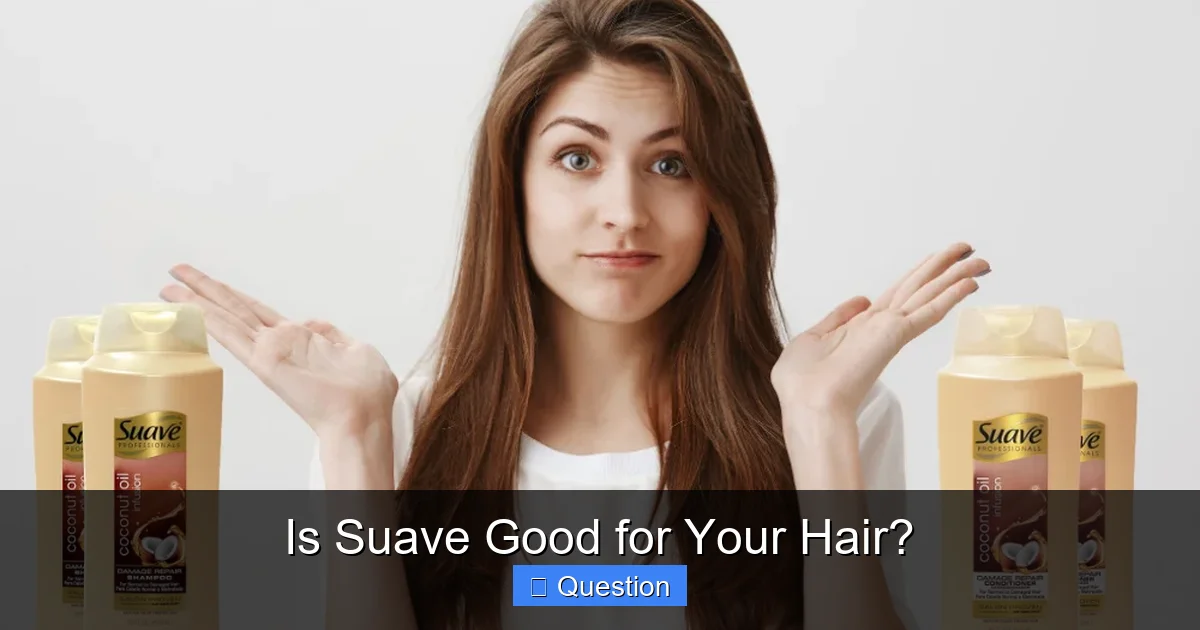
Visual guide about Is Suave Good for Your Hair?
Image source: haircaresquare.com
To truly answer “Is Suave good for your hair?”, we need to look beyond the price tag and marketing claims, and directly at the ingredient list. While formulations can vary across Suave’s many product lines, some common ingredients often raise questions for haircare enthusiasts.
Sulfates: The Foaming Agents
Many traditional Suave shampoos contain sulfates, such as Sodium Laureth Sulfate (SLES) or Sodium Lauryl Sulfate (SLS). These are detergents that create that rich, satisfying lather we often associate with “clean” hair.
- Pros: Sulfates are excellent at breaking down oil, dirt, and product buildup. If you have oily hair or use a lot of styling products, a sulfate-containing shampoo can give you a deep clean feeling.
- Cons: For some hair types, especially dry, curly, color-treated, or sensitive scalps, sulfates can be too stripping. They can remove natural oils, leading to dryness, frizz, fading color, and even scalp irritation.
It’s worth noting that Suave has introduced sulfate-free lines, like their Suave Professionals collections, which cater to those who prefer to avoid these ingredients. So, if sulfates are a concern, look for those specific labels.
Parabens and Other Preservatives
Parabens (like Methylparaben, Propylparaben) are commonly used as preservatives in many beauty products, including some Suave formulations. They prevent the growth of bacteria and mold, extending shelf life.
- Concerns: While deemed safe by regulatory bodies in small amounts, some consumers prefer to avoid parabens due to past (and often debated) associations with health concerns.
Again, Suave has started offering paraben-free options, reflecting consumer demand for “cleaner” beauty products.
Silicone: The Smooth Operator
Silicones (like Dimethicone or Cyclopentasiloxane) are often found in Suave conditioners and some shampoos. They create a smooth, slippery coating on the hair shaft.
- Pros: Silicones make hair feel incredibly soft, smooth, and detangled. They can add shine, reduce frizz, and protect hair from heat damage by creating a barrier.
- Cons: Some silicones, particularly heavier, non-water-soluble types, can build up on the hair over time, weighing it down and making it look dull. This buildup can also prevent moisture from penetrating the hair shaft. Regular clarifying shampoos can help remove this buildup.
Natural Extracts and Botanicals (or lack thereof)
Compared to more premium brands, Suave products generally contain fewer high concentrations of expensive natural oils, botanical extracts, or specialized protein complexes. While they often list ingredients like “almond oil” or “coconut milk,” these are usually present in very small amounts, primarily for fragrance or minor conditioning effects, rather than significant therapeutic benefits. This is a key factor in their lower cost.
Is Suave Right for Your Hair Type?
Understanding your hair type is crucial when asking, “Is Suave good for your hair?” What works for thick, oily hair might be detrimental to fine, dry strands.
Oily Hair: Stripping vs. Balancing
If you have oily hair, the strong cleansing action of traditional Suave shampoos with sulfates might actually be a benefit. They can effectively strip away excess sebum, leaving your hair feeling clean and fresh. However, be cautious: sometimes, stripping hair too much can cause your scalp to produce even more oil in response. Look for clarifying or volumizing Suave formulas if this is your hair type.
Dry or Damaged Hair: Hydration Challenges
For those with dry, brittle, or damaged hair (from heat styling, chemical treatments, or environmental factors), many traditional Suave shampoos might be too harsh. The sulfates can further strip away essential moisture, exacerbating dryness and potentially leading to more breakage. Suave’s conditioners might offer some temporary smoothness from silicones, but they might not provide the deep, penetrating hydration and repair that truly damaged hair needs. If your hair falls into this category, seek out Suave’s sulfate-free, moisturizing, or “healing” lines, or consider supplementing with a more intensive deep conditioner.
Fine Hair: Volume or Weigh-Down?
Fine hair can be a tricky balance. Heavy conditioners, especially those high in silicones, can easily weigh down fine hair, making it look limp and greasy. Some lighter Suave shampoos might provide a good clean without over-moisturizing. Look for Suave’s “volumizing” or “lightweight” formulas if you have fine hair. Always rinse thoroughly to avoid residue.
Curly or Textured Hair: The Sulfate Debate Revisited
Curly and textured hair types are inherently drier and more prone to frizz. Sulfates are often a big no-no for the curly community because they can severely dehydrate curls, leading to loss of definition and increased frizz. If you have curly hair, avoiding traditional Suave shampoos and opting for their sulfate-free versions, or pairing a regular Suave shampoo with a very rich, sulfate-free conditioner or leave-in, would be a better approach. The “Suave Professionals for Natural Hair” line is specifically designed with curly hair in mind.
Color-Treated Hair: Protecting Your Investment
Color-treated hair needs extra care to prevent fading. Sulfates can strip color molecules from the hair shaft, causing your vibrant shade to dull prematurely. If you have color-treated hair and want to use Suave, definitely opt for their sulfate-free, color-safe formulas. Even then, you might find that more specialized, acidic-pH haircare products better preserve your color.
The Pros and Cons of Using Suave Products
Let’s summarize the advantages and disadvantages of incorporating Suave into your haircare routine.
The Upsides: Budget-Friendly Beauty
- Unbeatable Price: This is Suave’s biggest draw. You simply can’t beat the cost-effectiveness, making quality haircare accessible to everyone.
- Wide Availability: You can find Suave virtually everywhere, from supermarkets to convenience stores.
- Variety of Formulas: Suave offers a vast range of products targeting different concerns – from volumizing to moisturizing, clarifying to color-safe. They even have dedicated lines like Suave Professionals which offer more advanced formulas.
- Effective Basic Cleanse: For hair that doesn’t have complex needs and just requires a regular wash, Suave shampoos do an excellent job of cleaning hair and scalp.
The Downsides: Potential Pitfalls
- Harsh Ingredients (in some lines): As discussed, sulfates can be too stripping for some hair types, and heavier silicones can cause buildup.
- Less Targeted Solutions: While Suave offers variety, the active ingredients for specific issues (like deep repair, intense hydration, or anti-frizz for severe cases) might not be as potent or concentrated as in higher-end brands.
- Potential for Buildup: The types of silicones often used can accumulate on hair, leading to dullness, limpness, and reduced effectiveness of other products over time.
- Limited Long-Term Benefits: For truly damaged or very dry hair, Suave products might offer temporary cosmetic improvements (like shine and smoothness) but may not provide the deep, reparative benefits needed for long-term hair health.
How to Get the Best Out of Suave (If You Choose It)
If you’ve decided to give Suave a try, or if it’s already a staple in your shower, here are some tips to maximize its benefits and minimize potential drawbacks.
Read the Labels Carefully
Don’t just grab the cheapest bottle! Suave offers many different lines. If you have dry hair, look for “moisturizing” or “hydrating” formulas, especially those labeled “sulfate-free.” For oily hair, “clarifying” or “volumizing” might be better. Pay attention to specific ingredients like “Suave Professionals Keratin Infusion” or “Suave Professionals Moroccan Infusion” which aim to provide more targeted benefits.
Supplement Your Routine
If you use a basic Suave shampoo and conditioner, consider adding a more intensive treatment to your routine.
- Deep Conditioner/Hair Mask: Once a week, use a richer, more potent hair mask (even from another brand if needed) to provide extra hydration or repair.
- Leave-in Conditioner: A good leave-in can help detangle, add moisture, and protect your hair throughout the day, especially if your Suave conditioner isn’t quite enough.
- Clarifying Shampoo: If you notice buildup from silicones, use a clarifying shampoo (which can be a basic Suave one!) once every few weeks to reset your hair.
Pay Attention to Your Hair’s Response
Your hair will tell you if a product is working.
- Positive signs: Hair feels clean, soft, manageable, and looks shiny without being greasy.
- Negative signs: Hair feels dry, brittle, overly tangled, greasy quickly, or your scalp becomes itchy or irritated.
If you experience negative effects, it might be time to switch, or try a different Suave formula.
Consider Alternating Products
You don’t have to be loyal to just one brand! Many people find success by alternating between an affordable option like Suave and a more specialized or higher-end product. For example, use Suave for your regular washes and save a more expensive, reparative product for weekly treatments or special occasions. This can help you manage costs while still addressing specific hair concerns.
Conclusion
So, is Suave good for your hair? The comprehensive answer is nuanced: Suave can be a perfectly good option for many hair types, especially for those seeking an affordable, accessible, and straightforward haircare solution. It excels at providing a basic cleanse and condition, and its newer lines offer more sophisticated, sulfate-free, and paraben-free formulations that cater to specific needs.
However, if you have very particular hair concerns – such as severe dryness, extensive damage, or a commitment to preserving vibrant color – you might find that Suave’s traditional formulas fall short. In such cases, you might need to seek out its specialized “Professionals” lines, or supplement your routine with more targeted treatments from other brands.
Ultimately, the best approach is to listen to your hair. Start with a Suave product tailored to your hair type, observe the results, and be willing to adjust your routine as needed. Suave’s affordability makes it an excellent starting point for experimentation, allowing you to discover what truly makes your hair happy without a significant financial commitment. Don’t dismiss it solely based on price; sometimes, simple and cost-effective can be surprisingly effective!
Frequently Asked Questions
Is Suave shampoo sulfate-free?
Many traditional Suave shampoos do contain sulfates like Sodium Laureth Sulfate. However, Suave also offers specific lines, such as many of their Suave Professionals products, that are explicitly formulated to be sulfate-free for those who prefer to avoid them.
Can Suave cause hair loss or damage?
Suave products are generally safe and not known to cause hair loss or damage when used as directed. However, if a particular formula is too stripping for your hair type (e.g., strong sulfates on very dry hair), it could lead to dryness, breakage, or scalp irritation over time, which might be perceived as damage.
Is Suave good for color-treated hair?
Traditional Suave shampoos containing sulfates can strip color from color-treated hair, causing it to fade faster. If you have color-treated hair, it’s best to opt for Suave’s specific “color protection” or “sulfate-free” lines to help preserve your hair color.
Why is Suave so inexpensive compared to other brands?
Suave keeps its prices low by using readily available, cost-effective ingredients, focusing on mass production, and having a long-established, efficient supply chain. They prioritize providing basic, effective haircare without the added cost of premium ingredients or extensive marketing often seen in luxury brands.
Do Suave products contain parabens?
Some Suave products may contain parabens as preservatives. However, like sulfates, Suave has started to introduce paraben-free options in many of their newer or reformulated product lines to cater to consumer preferences for “cleaner” ingredient lists.
How can I tell if a Suave product is right for my hair?
The best way is to try a formula specifically designed for your hair type (e.g., moisturizing for dry hair, volumizing for fine hair) and observe how your hair responds. Look for signs of good health like shine, softness, and manageability, and stop use if you notice increased dryness, frizz, or irritation.